
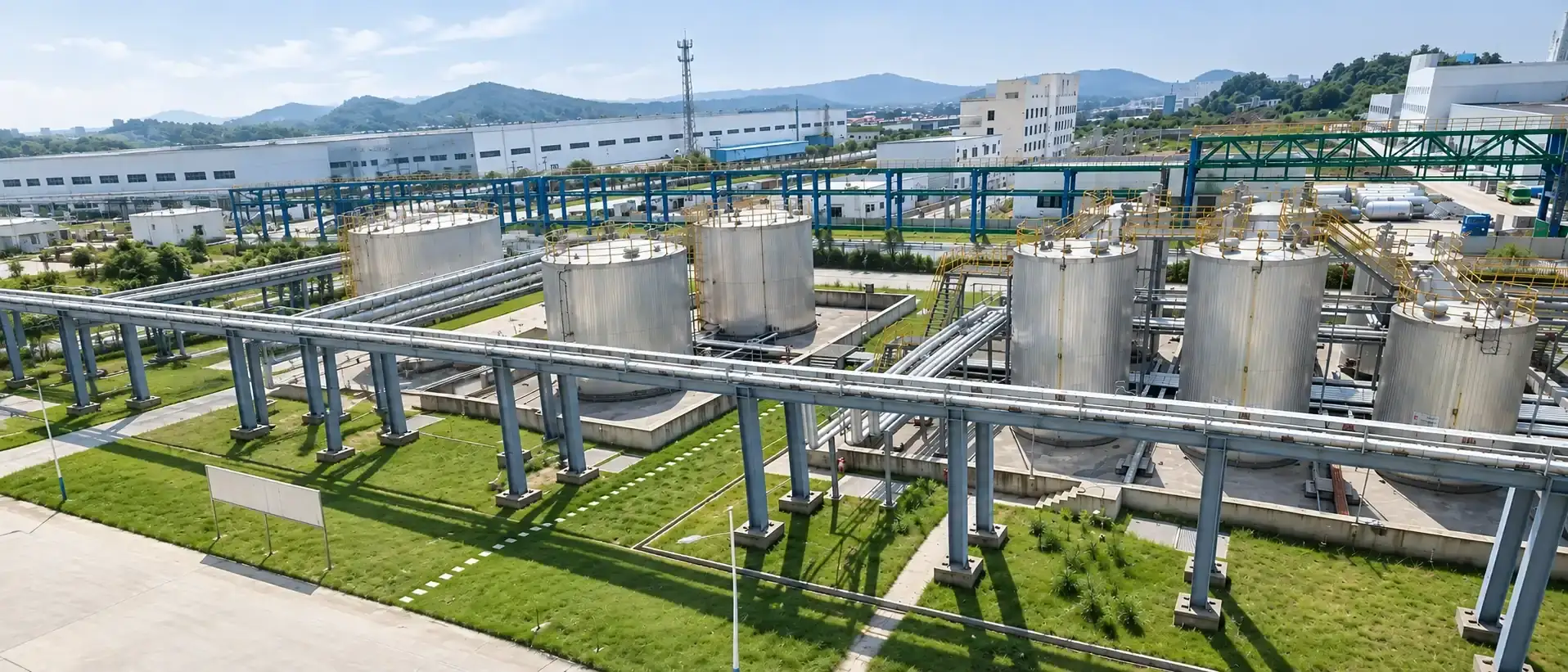
Manufacturing
How the Adhesive Is Made
The liquid adhesive line in the order it runs: bulk storage, heated reactor, second mixing stage, cooling, then filling. Between the storage tank and the filling head the batch stays in a closed system under computer control — which is the reason one batch resembles the last.
Last updated: 2026-09-18
Storage Tank to Filling Line
Six stages, in sequence. What decides the quality of the finished adhesive is not any one of them but whether the batch is held long enough at each — particularly the dissolving stage, where a batch moved on too early becomes an inconsistency nobody can correct later.
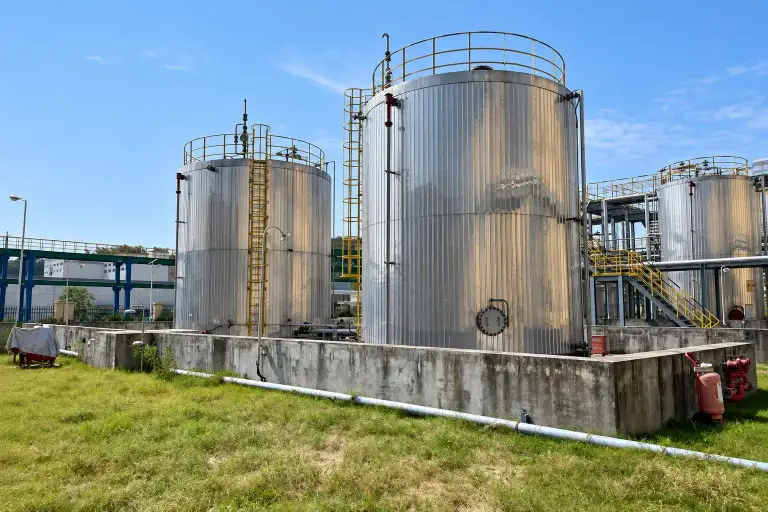
Stage 1
Raw materials in bulk storage
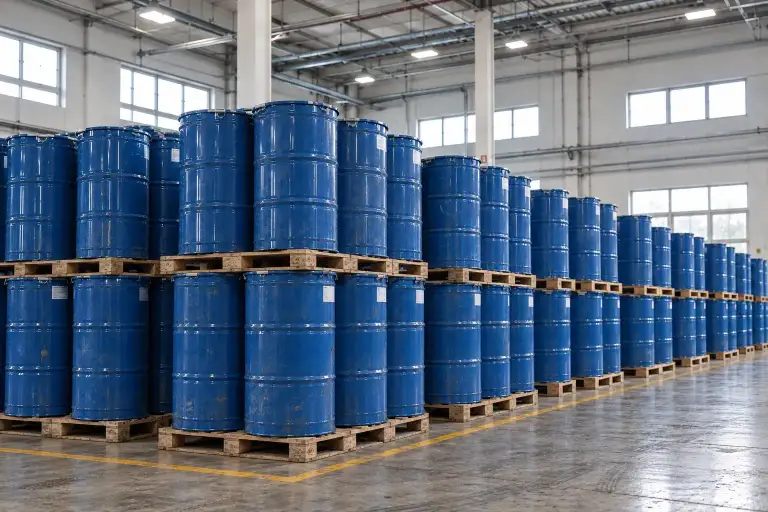
Solvents and liquid raw materials are held in bulk tanks outside the production hall and drawn from there by pipeline rather than decanted by hand. Drummed materials and dry components are stored separately and issued against the batch they belong to.
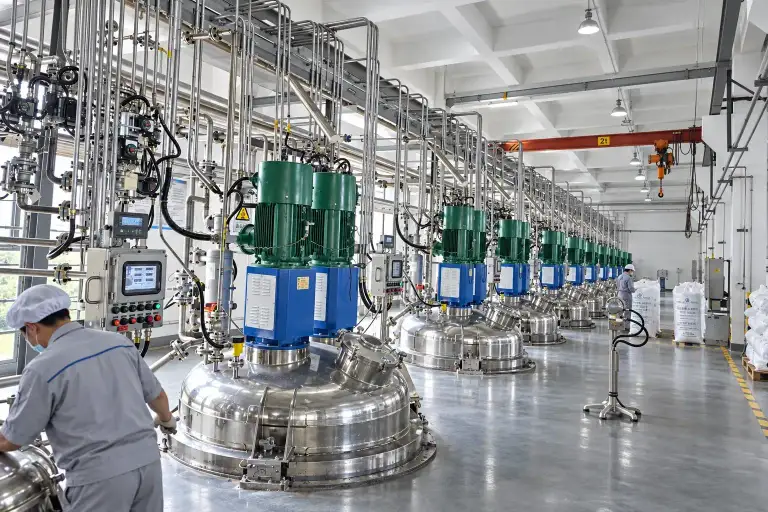
Stage 2
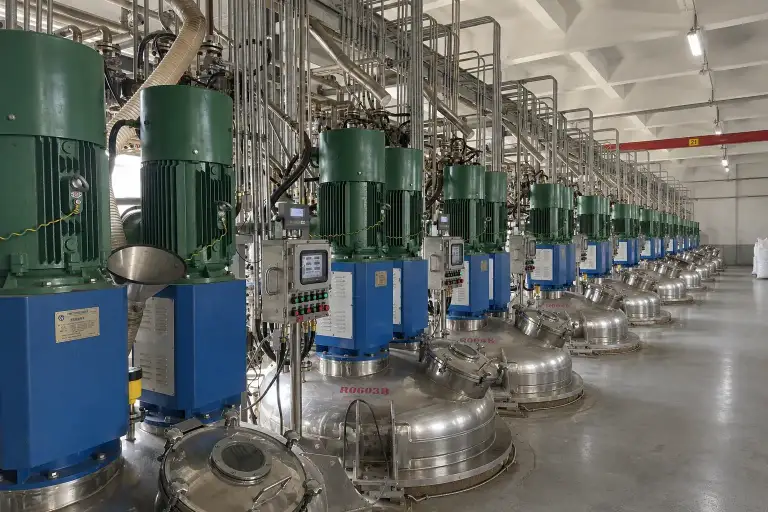
Charging the heated reactor
Liquid raw material is transferred through the pipework into a heated, agitated reactor. At the same stage the dry components — SBS rubber sheet, hydrocarbon resin and the rest of the solid charge — are weighed to the formulation ratio and added.
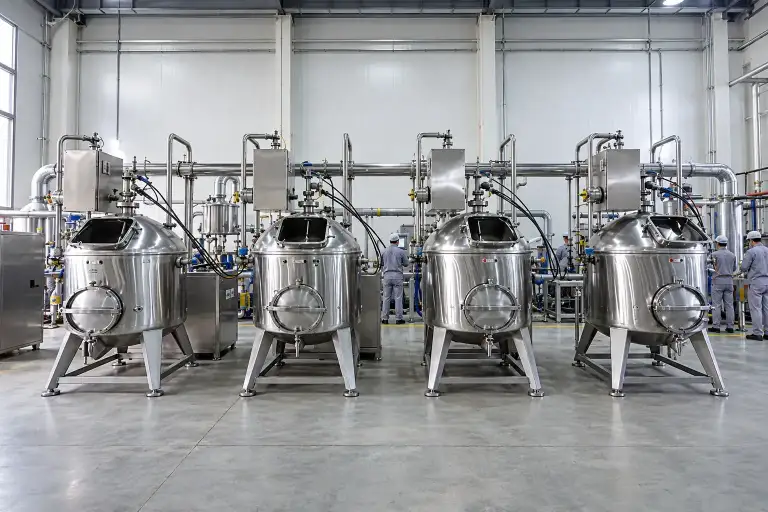
Stage 3
Heating until the charge is homogeneous
The batch is heated so the solid charge dissolves into the liquid phase, and held under agitation until liquid and solids have become one homogeneous mass. This is the stage that decides whether the finished adhesive is consistent or grainy.
Stage 4
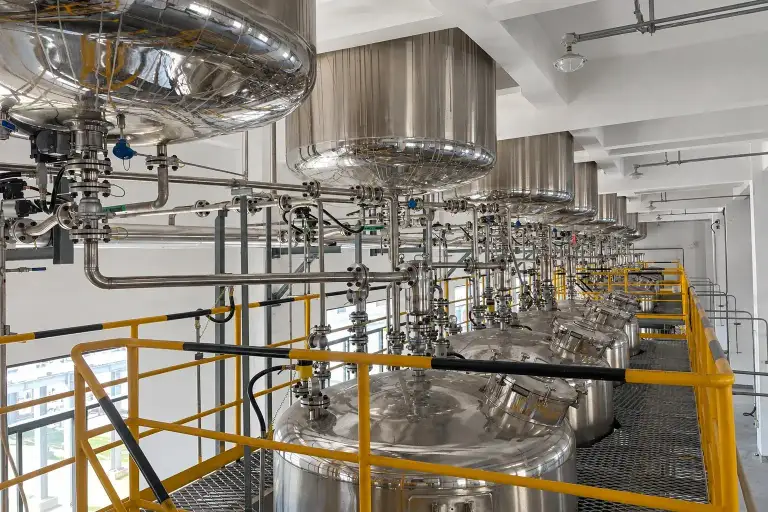
Second heated mixing stage
The batch is transferred to a mixing vessel for a second heated mixing stage, where the remaining components are worked in and the batch is brought to its final composition.
Stage 5
Cooling to room temperature
Mixing finishes and the batch is cooled to room temperature. Once cooled it is finished adhesive, and it stays inside the closed system until it reaches a filling head.
Stage 6
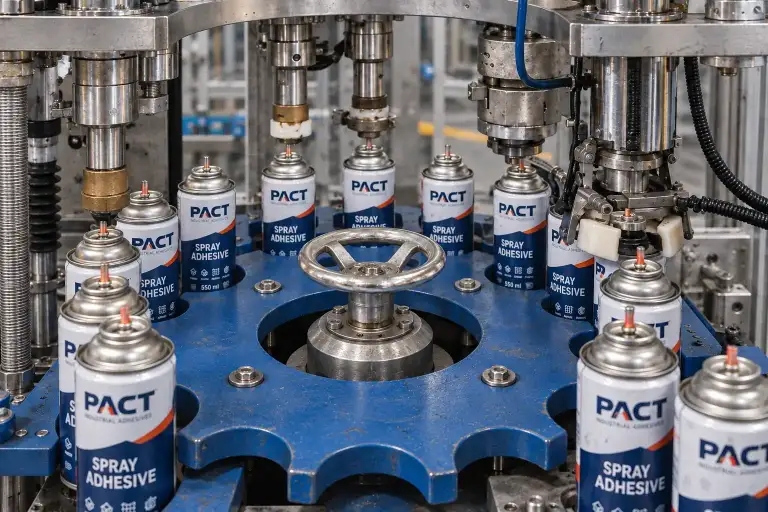
Pipeline transfer to the filling lines
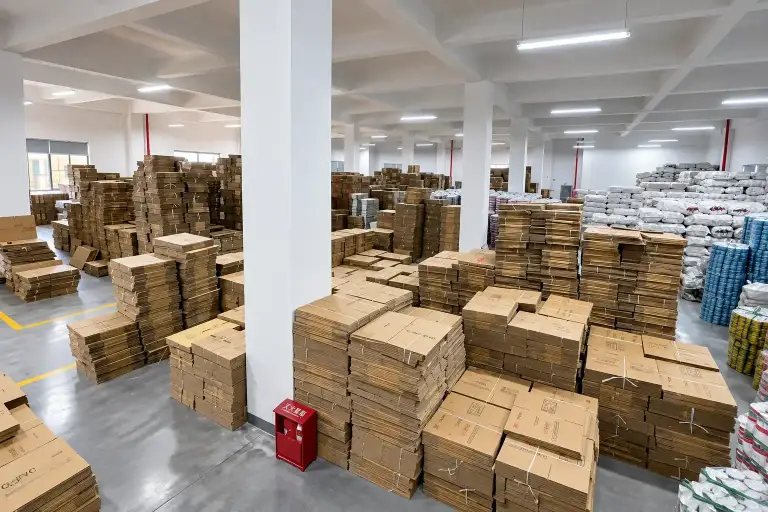
Finished adhesive is pumped through pipework to the filling lines — aerosol cans, tins and pails, or cartridges — where it is filled, capped and packed.
Automatic Up to the Filling Head
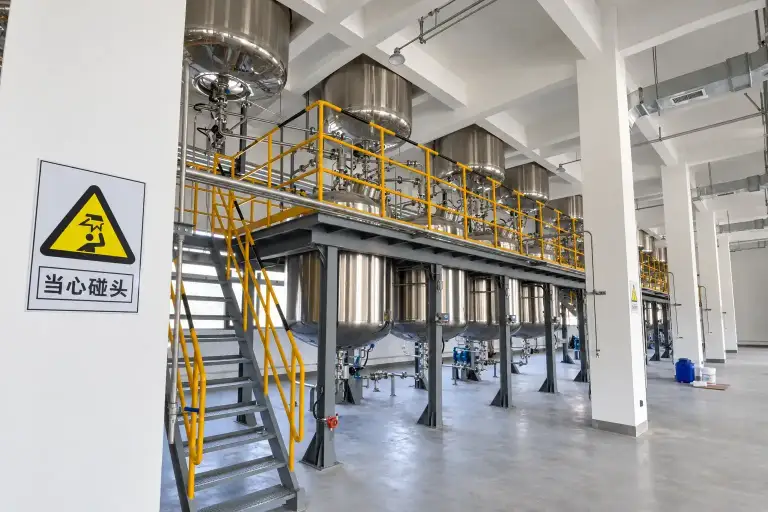
Transfer, heating, dissolving, mixing and cooling run under computer control, and the batch is not opened to the room between the tank farm and the filling line. Two things follow, and they are the two a buyer changing supplier actually worries about: the batch that arrives next quarter was made to the same recipe and the same thermal profile as this one, and nobody is carrying solvent around in open containers to produce it.
What automation does not do is check itself. Raw material still varies between deliveries, a heating stage can be cut short, and a filling head can drift. That is what the checks on our quality control page are for.
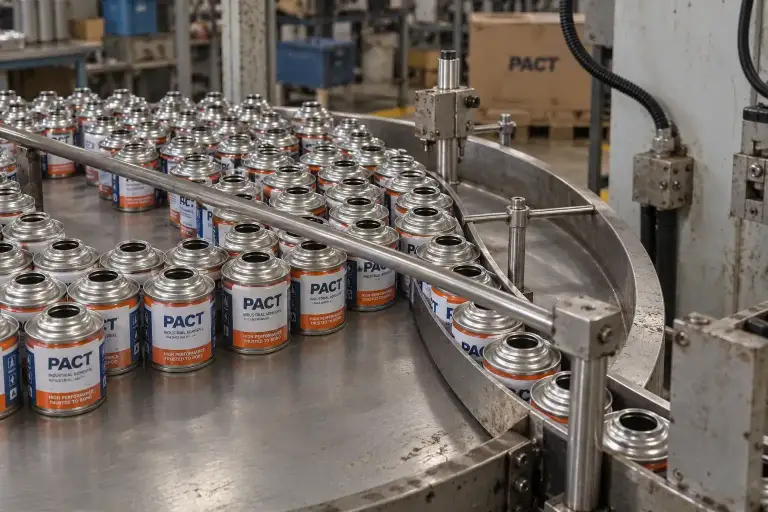
Materials In, Packed Goods Out
Solvent-borne products are stored and handled as the flammable liquids they are, which also decides how they can be shipped. See packaging formats for what each product travels in, and storage and shelf life for what happens to adhesive stored badly once it reaches you.
Frequently Asked Questions
Which parts of the process are automated?
Why does it matter that the dry materials are weighed separately?
Can I see the line before I place an order?
Do you make every product on this line?
From the line to your order
- See what is checked on every batch
Six checkpoints, the instruments behind them, and the documents to ask us for.
- See who actually manufactures this
PACT (GUANGZHOU) INDUSTRY CO., LTD — liquid, aerosol and cartridge lines under one roof in Nansha.
- Review our certifications and test reports
ISO 9001, ISO 14001, REACH statements and SGS reports, and what each one covers.
- Pack formats, and your market’s versions of them
Tins, drums, aerosols and cartridges — with the metric to US conversions that catch importers out.
- What happens between order and container
Eight stages with real durations, and the three places programmes actually stall.
- Put your own brand on it — OEM and ODM
Custom labels, cartons and formulation adjustments from our existing lines.
- Have a formulation developed on this line
Requirement review, lab work, sample, pilot batch — and what each stage costs in time.
- How to read the numbers on a datasheet
What each figure predicts, what it does not, and why one without its test method is not comparable.
- Storage, shelf life and what heat does to it
Why a container crossing the tropics at 60-70°C is the hardest storage condition your adhesive will see.
- Get a formulation under your market’s VOC limit
Four routes, including the exempt-compound substitution that keeps solvent-borne performance under a US limit.
- Eight checks before you pick a supplier
Manufacturer or trader, grade-level test data, VOC position and dangerous-goods handling — apply them to us too.
- Send a specification and get a quote
Substrate, volume and destination market are enough for us to price it.

Want to See the Line That Would Run Your Product?
Tell us the product and volume you are considering, and what you need to verify. A video walkthrough of the relevant line can be arranged, and visits are welcome.