
Quality control
What Gets Checked, and When
Six checkpoints between an incoming delivery and a loaded container, the instruments they are run on, and — the part that decides whether any of it is useful to you — the conditions a measurement has to carry before it can be compared with anyone else's.
Last updated: 2026-09-18
Six Checkpoints
The same six stages the factory overview lists, set out with what each one is actually for.
| Stage | When | What is checked | Why it is there |
|---|---|---|---|
| Incoming raw material | Before a delivery is released to production | Identity and condition of what arrived, against the delivery and the supplier document. | Raw material varies between deliveries and between suppliers. A batch made from unchecked material fails later, at your line rather than ours. |
| In-process viscosity | During mixing, before the batch moves on | Rotational viscosity at a stated rotor, speed and temperature. | Viscosity is the earliest signal that a batch is not tracking the recipe — and the number only means something with its test conditions attached. |
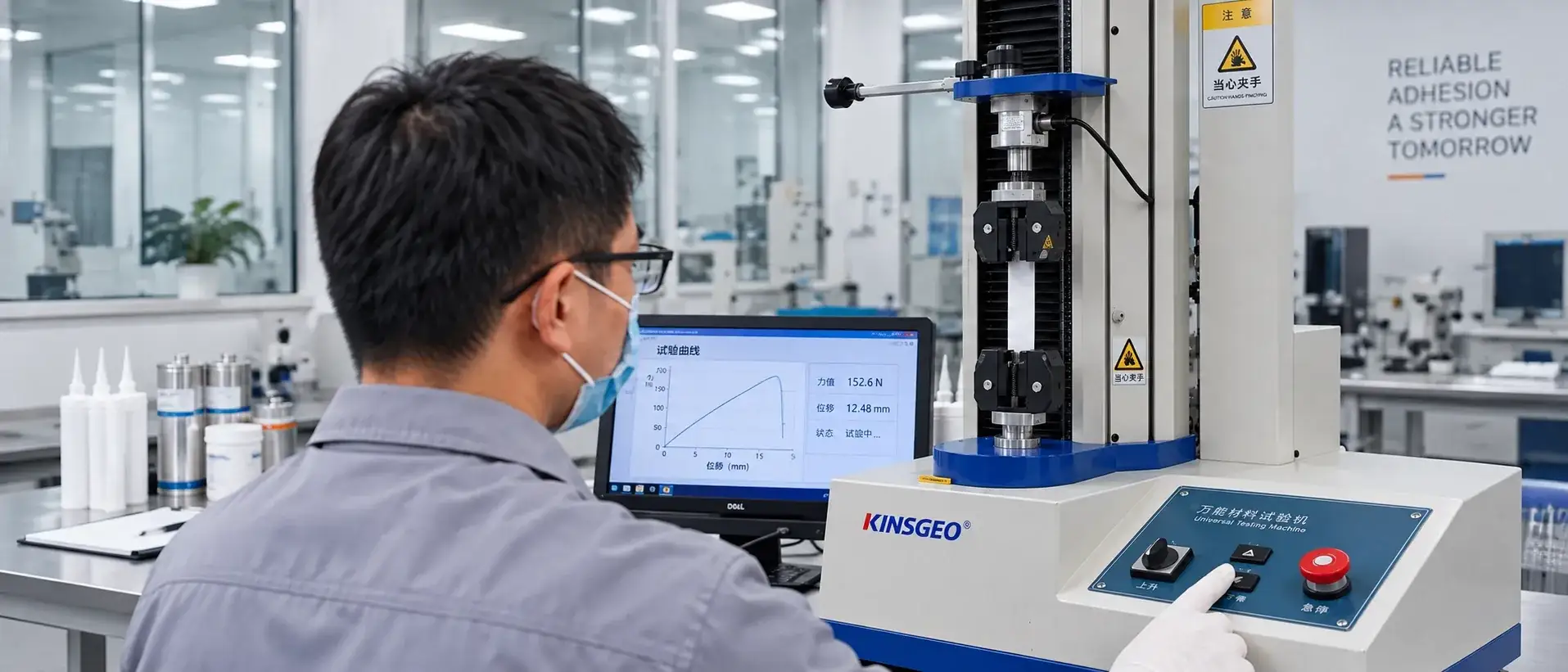
| Bond strength | On the finished batch | Peel on a prepared specimen using a universal testing machine. | It is the property buyers compare, and the one most often quoted without the substrate pair and method that produced it. |
| Heat resistance | On the finished batch, where the grade is specified for it | Behaviour of the bond after heat exposure. | A bond that passes at room temperature can fail in a hot container or beside a cooktop. |
| Packaging | At filling and packing | Fill, seal, label correctness and carton condition. | Most complaints that look like adhesive faults on arrival are fill or seal faults. |
| Pre-shipment sampling | Before the container is loaded | Random sampling from the packed goods. | It is the last point at which a problem can be caught before it becomes a claim. |
A Number Without Its Conditions Is Not a Measurement
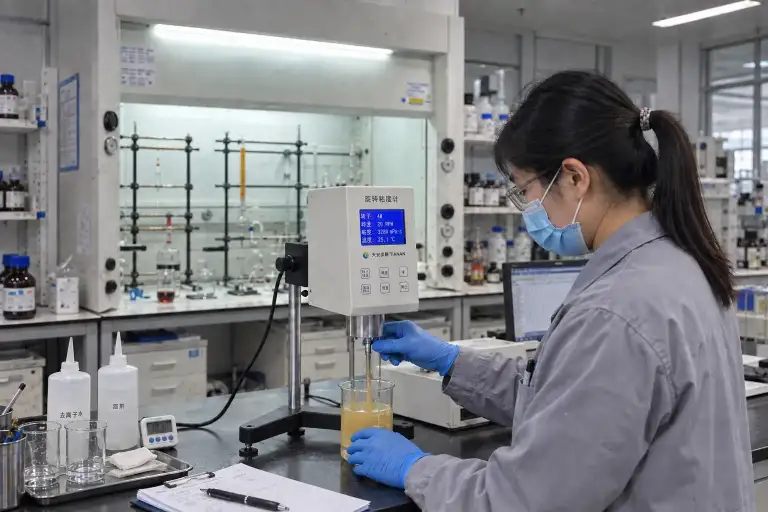
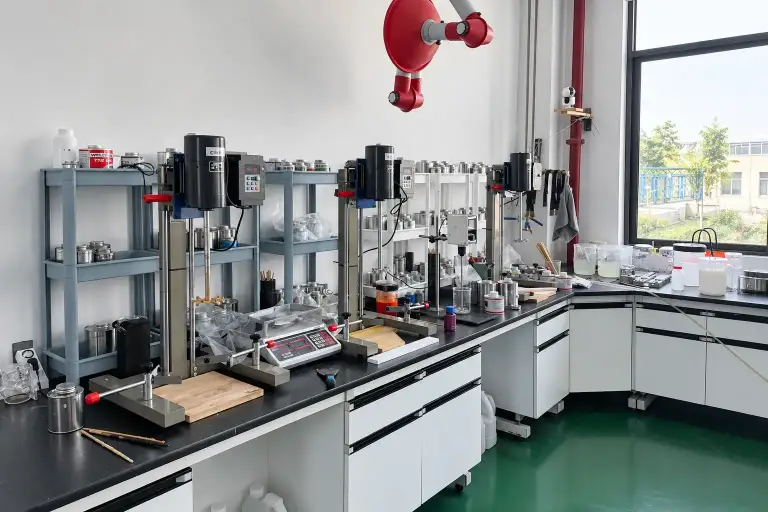
Two figures decide most adhesive purchases — viscosity and peel strength — and both are quoted carelessly across this industry. Viscosity changes with the rotor, the speed and the temperature. Peel changes with the substrate pair, the surface preparation, the coat weight, how long the bond cured and the angle and speed it was pulled at.
So when you compare two suppliers, compare the conditions before the numbers. A higher figure produced on a polished steel panel tells you nothing about a bond on your board, your foam or your sole material. Our guide to reading a datasheet sets out which conditions belong with which figure.
This applies to our own figures. The specifications published on the product pages are indicative values for the series; the technical data sheet issued with the grade you are supplied states the values that apply to it, with the conditions they were measured under.
What to Ask Us For
A quality system is only useful to a buyer through the documents it produces. Ask for these by name, and ask before the order rather than after a problem:
- —The technical data sheet for the exact grade quoted — not for the series, and not a brochure.
- —The safety data sheet in the language of the destination market, which also governs how the goods ship.
- —A certificate of analysis for the batch shipped, stating the properties you care about and the conditions they were measured under.
- —The batch number on the container you received, which is what makes any later question traceable.
- —Notice of a formulation or pack change before the goods arrive, so you can re-test rather than discover it on the line.
Where a document does not exist for a grade yet, we say so rather than send something that looks like it. A company-level certificate is not a test report for your batch, and treating one as the other is how a compliance problem reaches your customs broker. Our certifications page sets out what each document does and does not cover.
Frequently Asked Questions
What does a viscosity reading need before it means anything?
Can you send test results for the batch I receive?
Does testing every batch mean the adhesive will work on my materials?
What if something goes wrong after delivery?
What we test, and what to ask for
- Walk the production line stage by stage
Storage tank to filling head, photographed — and which stages run without a person.
- Review our certifications and test reports
ISO 9001, ISO 14001, REACH statements and SGS reports, and what each one covers.
- How to read the numbers on a datasheet
What each figure predicts, what it does not, and why one without its test method is not comparable.
- What to record when a bonded panel fails
The five facts that separate an adhesive problem from a process or storage problem.
- Eight checks before you pick a supplier
Manufacturer or trader, grade-level test data, VOC position and dangerous-goods handling — apply them to us too.
- Check the VOC limit for your destination market
Which instrument actually governs adhesives in the US, EU and China — and which ones are wrongly cited.
- Storage, shelf life and what heat does to it
Why a container crossing the tropics at 60-70°C is the hardest storage condition your adhesive will see.
- Look up a term and its other names
Non-acid silicone is neutral cure; liquid nails is grab adhesive. Fifty terms with their synonyms.
- Read the ordering and shipping FAQ
MOQ, lead time, payment terms, samples and documentation in one place.
- See who actually manufactures this
PACT (GUANGZHOU) INDUSTRY CO., LTD — liquid, aerosol and cartridge lines under one roof in Nansha.
- Send a specification and get a quote
Substrate, volume and destination market are enough for us to price it.
Need Test Data for a Grade You Are Evaluating?
Tell us the grade, the properties your customer specifies and the method they apply. We will send what we hold for it and say plainly where a test would still be needed.