
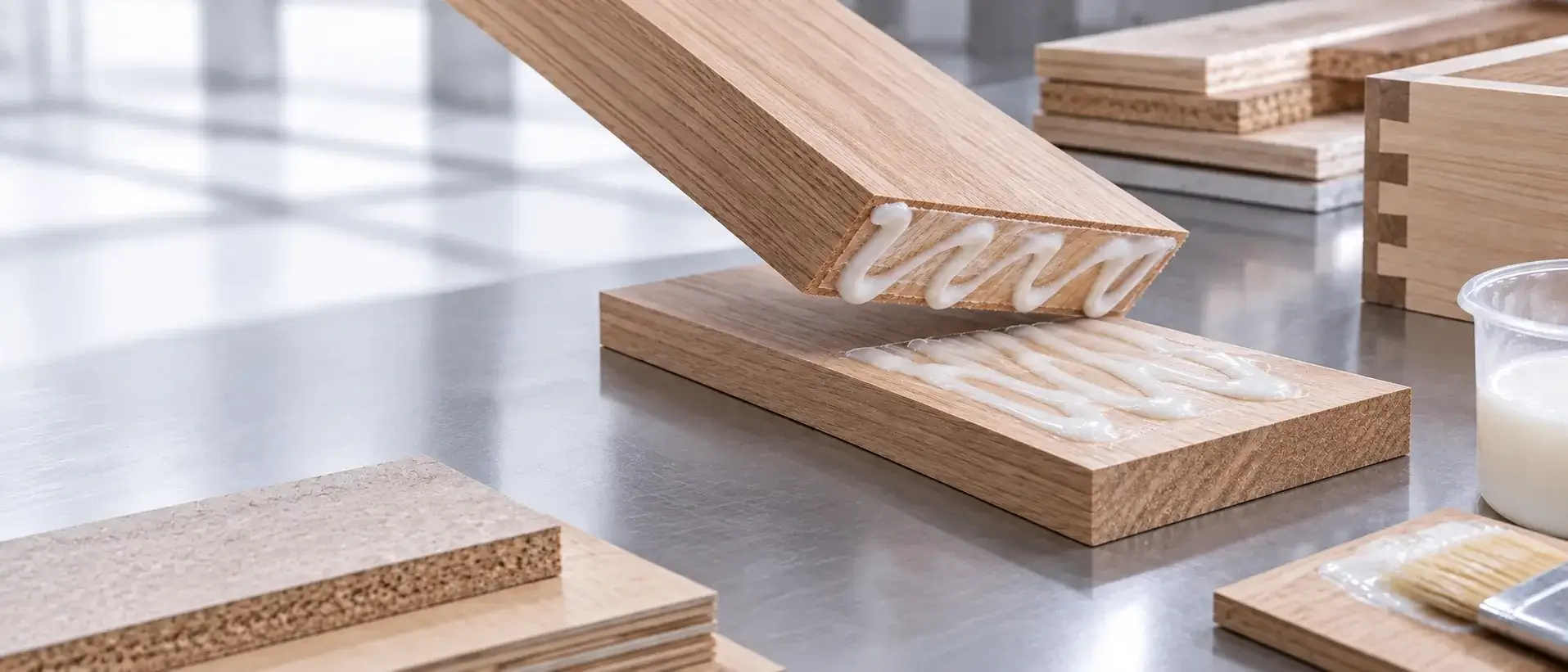
Water-Based Wood Adhesives
Most wood assembly and veneering is done with water-based adhesives — PVAc white glues and VAE-based adhesives — while vacuum membrane pressing uses water-based polyurethane. Which one fits depends on the joint, the wood’s moisture content, how it is pressed and the water resistance the finished piece needs.
An application we assess on request. Share your substrates, process and target requirements and we will confirm suitability, available documentation and sourcing feasibility — no stock grade is listed yet.
Discuss Your Application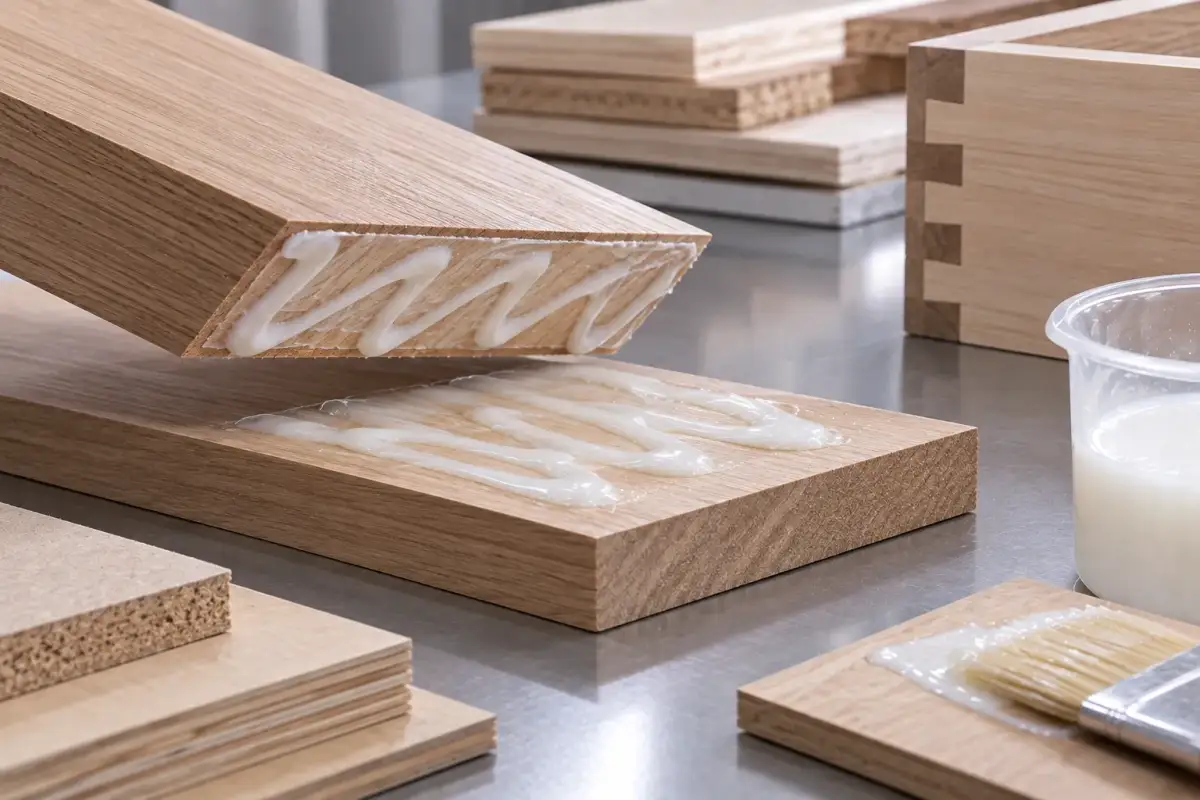
Which Adhesive for Which Job
| Job | Usual adhesive | Key point |
|---|---|---|
| Edge-gluing, joinery and assembly | PVAc | Wood moisture, clamp time, water-resistance class |
| Veneering and flat lamination | PVAc or VAE, sometimes with a hardener | Bleed-through on thin veneers, press temperature |
| Paper or foil to board | VAE or PVAc | The surface of the foil or paper |
| Vacuum membrane pressing of 3D foils | PU dispersion with crosslinker, heat-activated | Heat resistance at edges and grooves |
| Edgebanding | Usually hot melt (EVA or PUR), not water-based | Listed for completeness — a different technology |
PVAc: What "PVA Glue" Actually Is
PVAc is polyvinyl acetate dispersed in water. It sets as the water is absorbed by the wood and evaporates, forming a tough, slightly flexible film. It needs pressure while it sets and will not bond non-absorbent surfaces well on its own. Because "PVA" also stands for polyvinyl alcohol, write polyvinyl acetate in full on any specification or purchase order.
D1 to D4 Water-Resistance Classes
EN 204 classifies non-structural thermoplastic wood adhesives by the exposure they withstand, tested by the methods in EN 205. A class applies to a named product with a test report.
| Class | Intended exposure |
|---|---|
| D1 | Interior, dry, occasional short exposure to moisture |
| D2 | Interior, occasional short exposure to water or high humidity |
| D3 | Interior with frequent short exposure to water or high humidity; exterior not exposed to weather |
| D4 | Interior with frequent long exposure to water; exterior exposed to weather with an adequate surface coating |
These classes are for non-structural work such as furniture and joinery. Load-bearing timber structures use adhesives classified under different standards.
VAE-Based Adhesives
Vinyl acetate–ethylene (VAE) copolymers give a more flexible film than PVAc and hold better on difficult surfaces such as coated papers and some plastic foils, which is why they appear in foil and paper lamination. VAE is sold both as a raw dispersion for formulators and as finished adhesive — say which you need. It is unrelated to EVA hot melt, despite the similar monomers.
Vacuum Membrane Pressing
For thermoformed foils on shaped MDF fronts, a water-based polyurethane dispersion with crosslinker is sprayed onto the board, dried, then activated by heat as the membrane press forms the foil. The usual failures are foil lifting at edges and grooves when the finished door gets warm, insufficient activation in deep profiles, and dust from routing left on the board. The crosslinker also gives mixed adhesive a pot life. Tell us the foil, the press and the heat the finished doors must withstand.
Moisture Content, Open Time and Pressing
Bond quality depends on the wood being at the moisture content it will live at, the glue being joined within its open time, and pressure held until the joint has set. Warm workshops shorten open time; cold ones lengthen press time and, below the minimum film-forming temperature, stop the glue forming a film at all. The TDS gives these limits for a grade — follow it rather than a general rule.
What to Tell Us
| Parameter | Why it matters | What to tell us |
|---|---|---|
| Joint or lamination type | Assembly, veneering, foil lamination and membrane pressing use different adhesives. | What is bonded to what |
| Wood species and moisture content | Wood that is too wet or too dry weakens the bond and moves after pressing. | Species, measured moisture |
| Pressing method | Cold press, hot press, clamps and vacuum membrane presses set open time and cure speed. | Press type, temperature, time |
| Water-resistance class | D3 and D4 formulations differ, and D4 often needs a hardener. | Class required and by whom |
| Workshop temperature | Below its minimum film-forming temperature a PVAc glue dries chalky and weak. | Lowest temperature in use and storage |
| Surface of foils or papers | Lacquered and plastic foils need adhesives formulated for low-absorbency surfaces. | Foil or paper type |
For laminate bonded with contact adhesive instead, see bonding HPL laminate and our water-based contact adhesive.
Frequently Asked Questions
Is PVA glue the same as PVAc?
Should I specify D3 or D4?
Why did my glue line dry white and powdery?
Why does glue show through thin veneer?
Can PVAc replace contact adhesive for laminate on board?
Sources
- H.B. Fuller, Rakoll wood adhesives
- Wacker, VINNAPAS EP 706 — VAE dispersion
These references describe the technology in general. Performance figures from other manufacturers apply to their products, not to PACT grades, and a citation does not imply endorsement. Content reviewed September 14, 2026.
Related guidance for furniture and joinery
- What furniture factories specify
Laminate, veneer and panel bonding requirements.
- Bonding HPL laminate with contact adhesive
The route for work without a press.
- Water-based contact adhesive
Contact bonding without solvent.
- All water-based adhesive options
Chemistries compared by application.
- How to read the numbers on a datasheet
What each figure predicts, what it does not, and why one without its test method is not comparable.
- Storage, shelf life and what heat does to it
Why a container crossing the tropics at 60-70°C is the hardest storage condition your adhesive will see.
- Look up a term and its other names
Non-acid silicone is neutral cure; liquid nails is grab adhesive. Fifty terms with their synonyms.
- Send a specification and get a quote
Substrate, volume and destination market are enough for us to price it.
Share Your Materials and Process
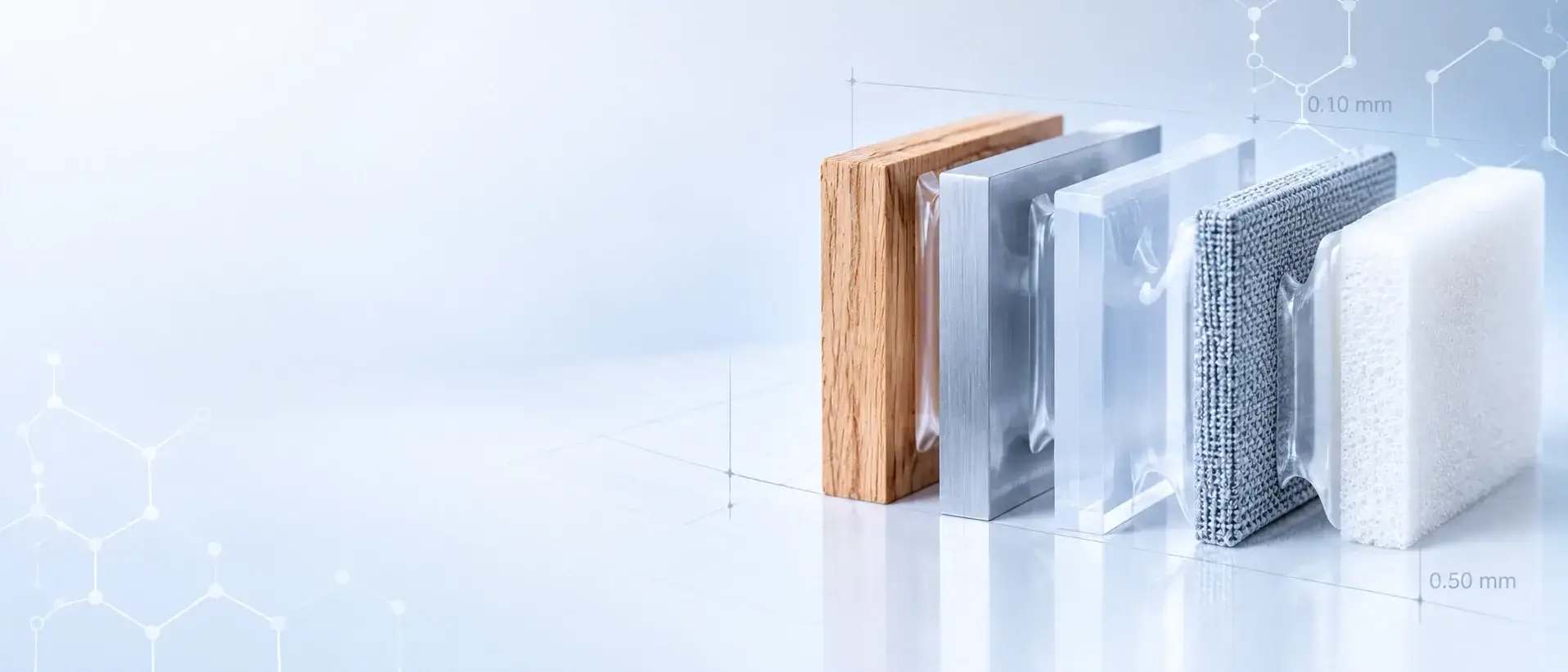
Share the materials you need to bond or coat, your application process and any target specification. We will review the request and confirm sourcing feasibility, available documentation and next steps.