
Industry Solutions
Adhesive & Sealant Solutions for Construction & Building
Complete range of construction adhesives, silicone sealants, and PU foam for building, renovation, and infrastructure projects. Engineered for structural bonding, weatherproofing, and gap sealing.
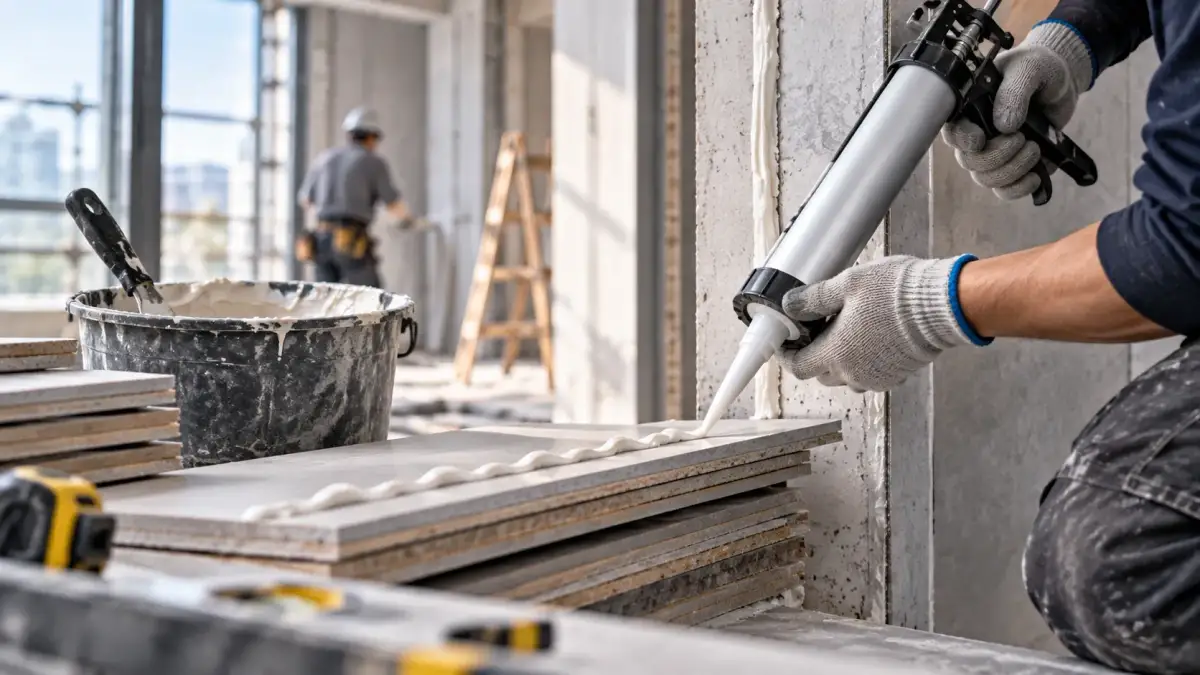
Adhesive & Sealant Requirements in Construction
The construction industry is the largest consumer of sealants and a major consumer of adhesives globally. Every building — from residential houses to commercial towers and infrastructure — requires sealants for weatherproofing joints, adhesives for mounting and bonding, and foam for gap sealing and insulation. The market demand is driven by new construction volume, renovation activity, and increasingly stringent energy efficiency requirements that demand better sealing performance.
Construction projects in our target markets — the Middle East, Africa, Southeast Asia, and Latin America — face particular challenges related to extreme climate conditions. Desert environments with UV index exceeding 10, tropical humidity above 80%, and thermal cycling from near-freezing nights to 50°C+ daytime temperatures all stress sealant and adhesive joints far more than temperate climate applications. Product selection must account for these conditions.
Common adhesive and sealant challenges in construction projects include:
- —Sealant failure in curtain wall and window joints due to UV degradation and thermal cycling
- —Insufficient bond strength for heavy panel and tile mounting applications
- —PU foam shrinkage and poor adhesion in door/window installations
- —Difficulty selecting between neutral and acetoxy silicone sealant for specific substrates
- —Compliance requirements for fire-rated sealants and adhesives in commercial projects
PACT supplies a complete range of construction adhesives and sealants: silicone sealant for weatherproofing and glazing, PU foam for gap filling and insulation, and construction adhesive for panel and tile mounting. All products are formulated to withstand the demanding conditions of construction sites in tropical, arid, and variable climates.
Key Applications in Construction
Curtain Wall and Window Glazing
Neutral silicone sealant is the standard material for sealing curtain wall joints, window perimeters, and structural glazing systems. The sealant must accommodate building movement (thermal expansion, wind load deflection, seismic activity) while maintaining a weatherproof seal for the building's service life — typically 20+ years. Neutral cure chemistry is essential because it does not release corrosive acid that would damage aluminum frames, coated glass, or stone substrates.
Door and Window Installation
PU foam sealant is the primary material for sealing the gap between door/window frames and the rough opening in masonry or wood frame walls. The foam expands to fill irregular gaps, provides thermal insulation (R-value approximately 3.5 per inch), and creates an air seal that prevents drafts and moisture infiltration. Proper application — filling to 50% depth and allowing expansion — is critical for performance.
Panel and Tile Mounting
Construction adhesive (nail-free adhesive) mounts wall panels, decorative elements and skirting boards, with bond strength specified above 1.5 MPa on concrete, brick, wood and metal. High-initial-tack formulations hold panels in position within minutes, which can reduce temporary propping — but initial grab does not establish the load capacity of the installation. Follow the panel system's approved fixing method, including any mechanical fixings it calls for, and the adhesive grade's curing and support requirements.
Recommended Products for Construction
silicone sealant
Neutral Silicone Sealant
Non-corrosive weatherproofing sealant for curtain wall weather seals, windows, bathroom joints and expansion joints. Releases no acetic acid; marble, natural stone and mirror joints need a grade tested as compatible with that material.
View Product →pu foam
PU Foam Sealant
Expanding polyurethane foam for door/window frame sealing, gap filling, and insulation. Foam yield of roughly 35-45× the liquid volume, with good adhesion to masonry, wood, and metal substrates.
View Product →construction adhesive
Construction Adhesive
Nail-free mounting adhesive for panels, skirting and decorative elements, with bond strength specified above 1.5 MPa. Initial grab holds the part while it cures; follow the installation system's fixing and support requirements.
View Product →Compare Other Technologies for This Application
Technical Considerations
Neutral vs Acetoxy Silicone Sealant Selection
Neutral cure silicone sealant releases alcohol or oxime during curing and does not corrode metals or react with concrete the way acetoxy does — making it the default choice for curtain wall weather seals, window sealing, and bathroom applications. Mirror backings and porous natural stone still need a grade tested as compatible with them. Acetoxy cure silicone sealant releases acetic acid during curing and should not be used with copper, brass, marble, or cementitious substrates as it causes corrosion or discoloration. Acetoxy is faster curing and lower cost, suitable for glass-to-glass bonding and general purpose sealing where substrate corrosion is not a concern.
PU Foam Application Best Practices
PU foam sealant requires moisture to cure. In dry climates or during winter construction, misting the joint surfaces with water before foam application significantly improves adhesion and cure speed. The gap should be filled to approximately 50% depth, as the foam expands to fill the remaining volume. Over-application causes bowing of frames and waste. Our one-component PU foam achieves full cure in 8-12 hours at 20°C and 50% relative humidity.
Fire Rating Compliance
Commercial and high-rise projects often specify fire performance for joint materials, and two different requirements get asked for. Reaction to fire classifies the material itself: our flame-retardant PU foam is classed B1 to DIN 4102-1, meaning it is hard to ignite and does not keep burning. Fire resistance rates a complete sealed joint or service penetration, tested as a system with a stated joint size, backing and wall construction, and is quoted in minutes. A B1 material class is not a fire-resistance rating, and we do not list a firestop system in this catalogue. Where a firestop or fire-rated joint is specified, send us the clause and we will tell you whether we hold a matching test report.
Application Example
Commercial Tower in Riyadh — Curtain Wall Sealant Supply
A general contractor in Riyadh, Saudi Arabia required 45,000 cartridges of neutral silicone sealant for a 32-story commercial tower curtain wall installation. The project specification required UV resistance rated for desert conditions (extreme UV index 10+), temperature cycling from 5°C to 65°C, and movement accommodation of ±25%. PACT supplied our NS-6600 neutral silicone sealant, which met all specification requirements and passed the contractor's independent laboratory testing. The order was delivered in 3 phased shipments over 8 months, each batch with full QC reports and MSDS documentation.
Frequently Asked Questions
What is the difference between neutral and acetoxy silicone sealant?
Can PU foam be used for thermal insulation?
What construction adhesive do you recommend for heavy panel mounting?
Do your sealants meet international building standards?
What is the shelf life and storage requirements for construction sealants?
Need Sealants and Adhesives for Your Construction Project?
Whether you need bulk silicone sealant for a high-rise project or construction adhesive for a renovation, our team can provide the right products with competitive pricing and reliable delivery.