
Contact Adhesive
Water-Based Contact Adhesive
Water-based polychloroprene contact adhesive for porous substrates, with VOC content stated on the grade TDS so it can be checked against the limit your market applies to that adhesive category.
Water-based contact adhesive represents the industry's response to tightening global VOC regulations and growing demand for safer workplace environments. Unlike solvent-based formulations that rely on toluene, acetone, or other volatile organic compounds as carriers, water-based contact adhesive uses water as its primary dispersion medium. The active bonding polymer — typically a polychloroprene (neoprene) latex or an acrylic-modified dispersion — is suspended in water rather than dissolved in organic solvents, which brings VOC content on this grade below 50 g/L.
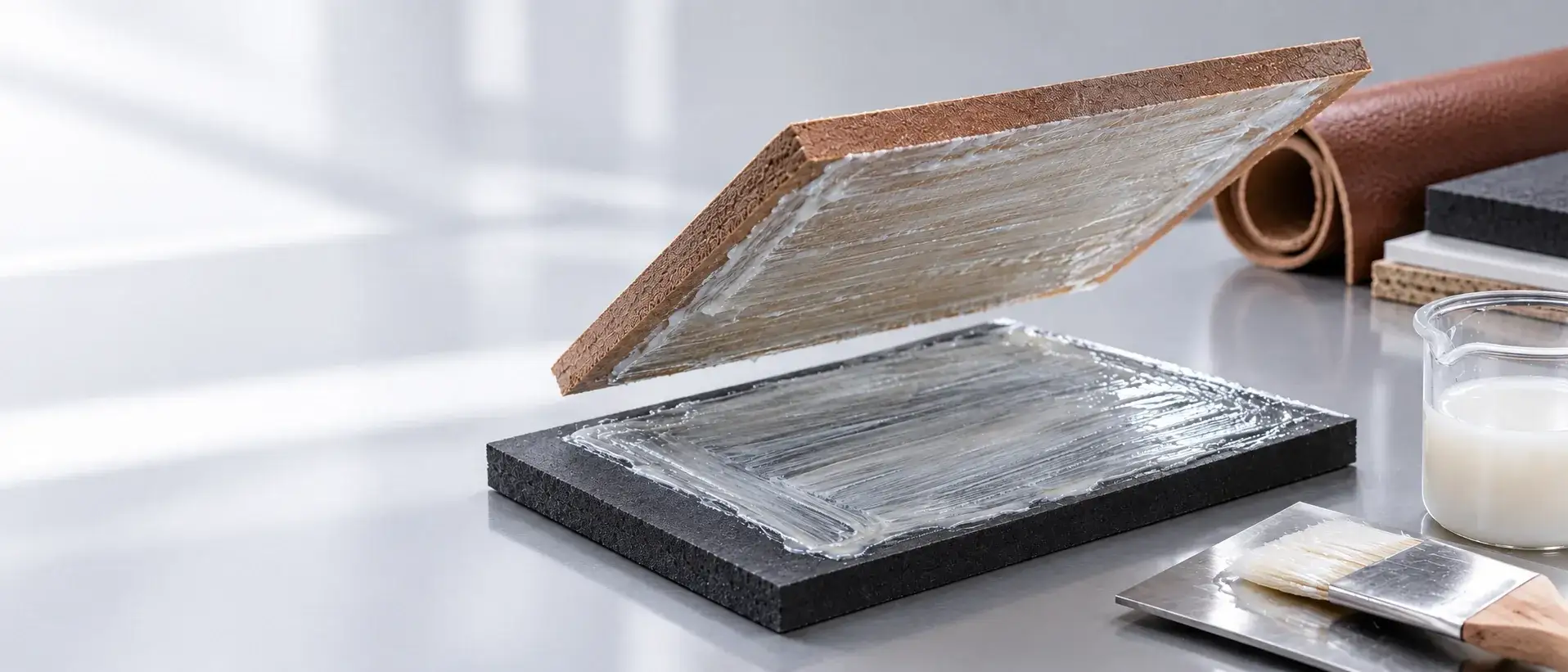
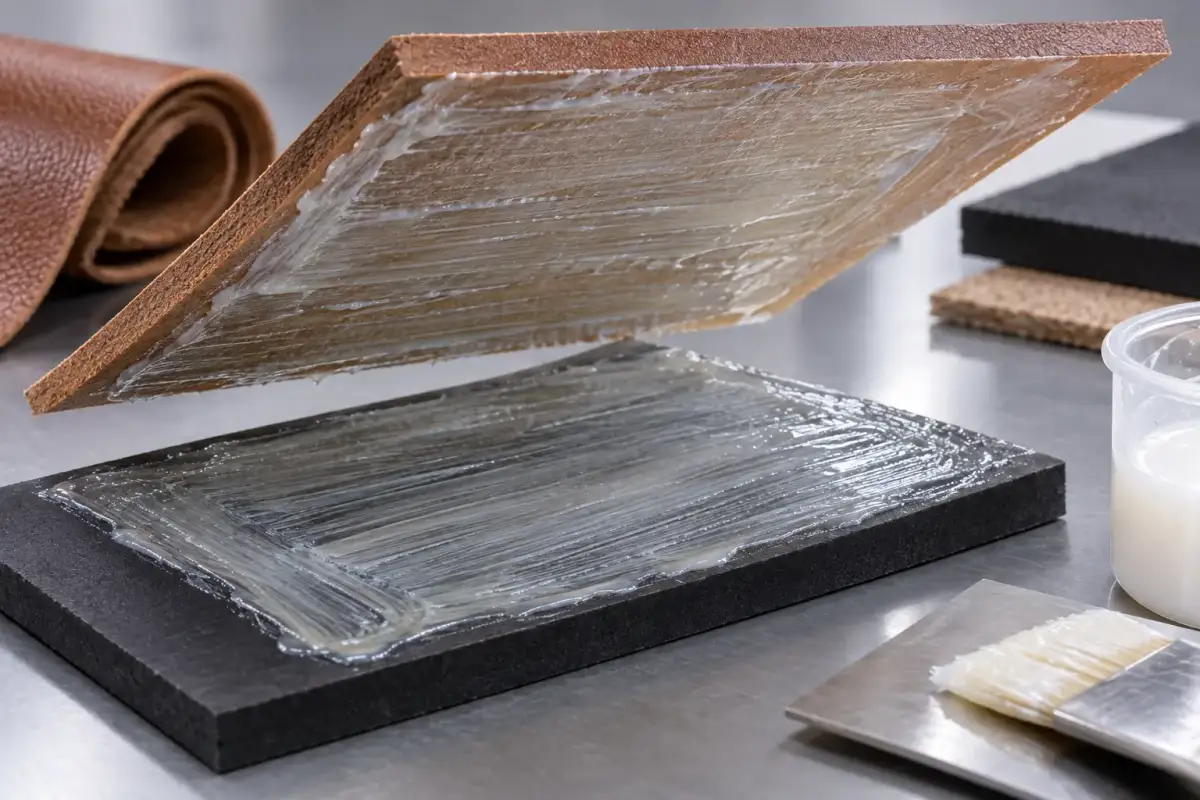
The polychloroprene dispersion technology behind our water-based formulation delivers bond performance that approaches solvent-based alternatives on porous substrates. On wood-to-laminate bonds this grade is specified at 2.5 N/mm peel or greater, which suits most indoor furniture and textile lamination work. On non-porous substrates, and wherever the bond sees heat, peel-test it against a solvent grade on your own materials before switching. The adhesive dries from a white, milky liquid to a clear, transparent film, providing a visual cue for operators to know when the adhesive has reached proper tack for bonding.
Compliance is usually why buyers look at water-based adhesive, so it helps to separate three things that are often run together. VOC content is what is in the tin — for this grade, below 50 g/L — and it is what market limits such as those in our VOC limits by market reference are written against. Substance restrictions such as REACH and GB 18583 concern which chemicals are present, and are declared per grade. Emission labels such as GREENGUARD or EMICODE are chamber tests on a named product; we do not claim one for this grade, so a project that requires an emission label needs that test arranged. Ask for the documents that match the requirement you actually have to meet.
Key Features
- Low VOC content — below 50 g/L on the grade TDS
- Water carrier instead of a flammable solvent — check the grade SDS for its classification and ventilation advice
- Zero toluene, xylene, and methylene chloride content
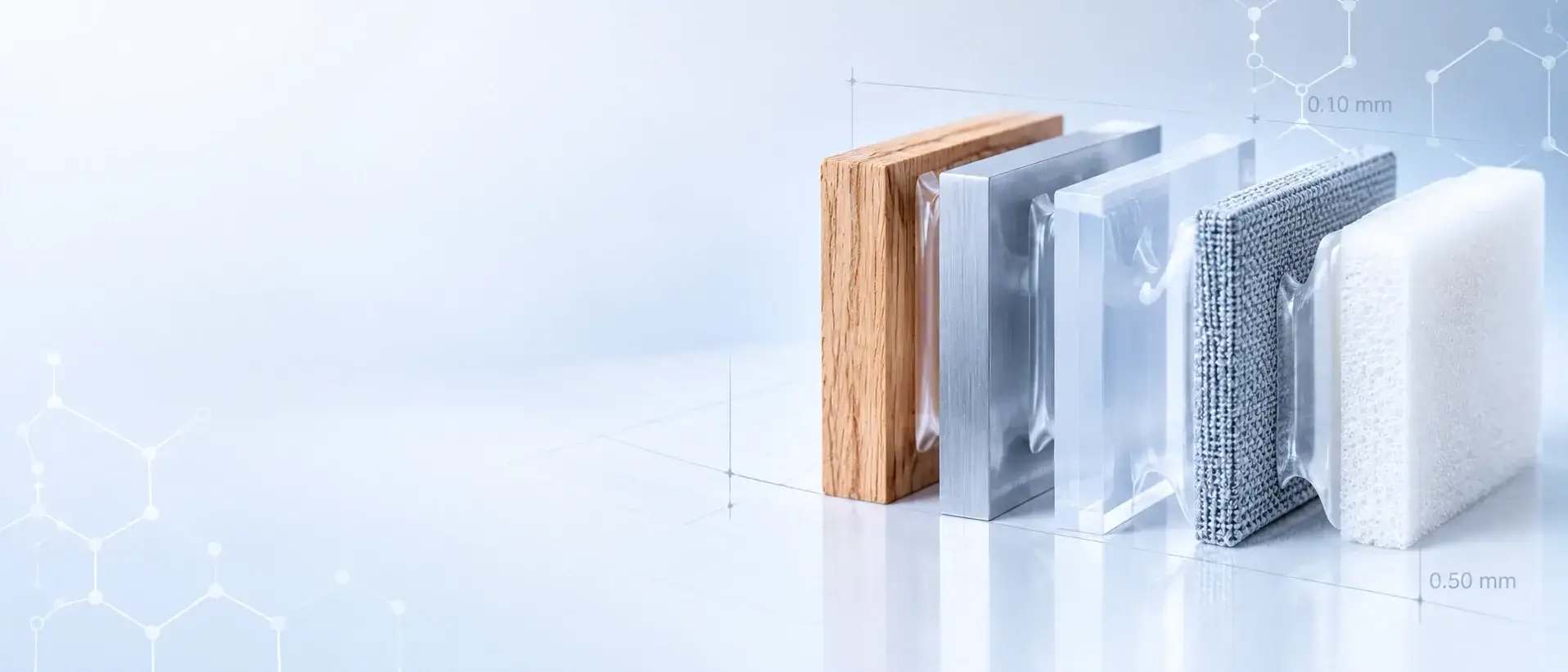
- Suited to porous-to-porous and porous-to-laminate bonds — peel-test on your own substrates before replacing a solvent grade
- Dries from milky white to clear, a visible cue that the film is ready to bond
- Water cleanup — no solvent required for tool cleaning
Technical Specifications
| Parameter | Value |
|---|---|
| Base Polymer | Polychloroprene dispersion / Acrylic blend |
| Solid Content | 45-55% |
| Viscosity | 3,000-6,000 mPa·s |
| Density | 1.05-1.15 g/cm³ |
| pH Value | 9.0-11.0 |
| Open Time | 20-40 minutes |
| Bond Strength (Peel) | ≥2.5 N/mm (wood-to-laminate) |
| Heat Resistance | -10°C to +80°C |
| VOC Content | <50 g/L |
| Color | White / Milky (dries clear) |
| Shelf Life | 6-12 months (sealed, 5-35°C, avoid freezing) |
| Packaging | 1L, 5L, 20L pails; 200L drums |
Indicative values for the series. Figures move with the grade, the substrate pair, coat weight and cure conditions, so treat them as a basis for comparison rather than a specification — the technical data sheet for the grade you are supplied states the values that apply to it, and the conditions they were measured under.
Applications
- Indoor furniture manufacturing — laminate, foam, and fabric bonding
- Interior fit-out where the project specification limits adhesive VOC content
- Automotive interior trim — subject to the customer’s own heat-ageing and fogging qualification
- Textile and fabric lamination — foam-to-fabric bonding for upholstery
Explore industry applications: Furniture & Woodworking, Construction, Automotive.
Available Packaging
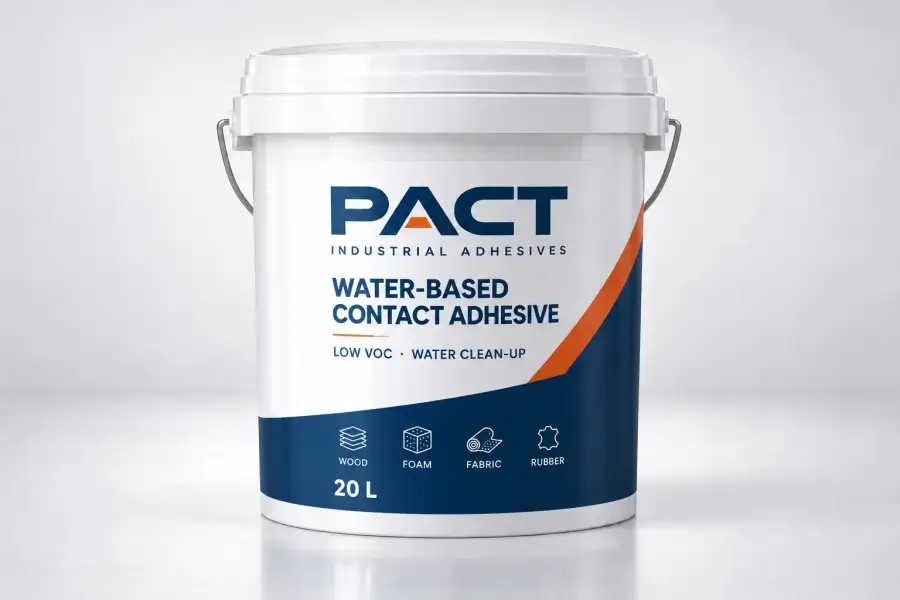
Water-based contact adhesive is supplied in 1L, 5L, and 20L plastic pails, and 200L plastic-lined drums. Unlike solvent-based products, water-based adhesive does not require metal containers and can be safely shipped in HDPE packaging. All containers include tamper-evident seals. Custom packaging formats and OEM branding services are available for qualified orders.
Certifications & Compliance
Quick Specs
- Base Polymer
- CR Dispersion
- VOC Content
- <50 g/L
- Bond Strength
- ≥2.5 N/mm (wood-to-laminate)
- Heat Resistance
- -10°C to +80°C
- Solid Content
- 45-55%
Get a Quote
Request pricing, samples, or technical data sheets for Water-Based Contact Adhesive.
Request a QuoteFrequently Asked Questions
Is water-based contact adhesive as strong as solvent-based?
What VOC level does your water-based adhesive achieve?
Can water-based contact adhesive be used in cold climates?
What is the drying time for water-based contact adhesive?
Ready to Order Water-Based Contact Adhesive?
Contact our sales team for factory-direct pricing, bulk order discounts, and free product samples.