
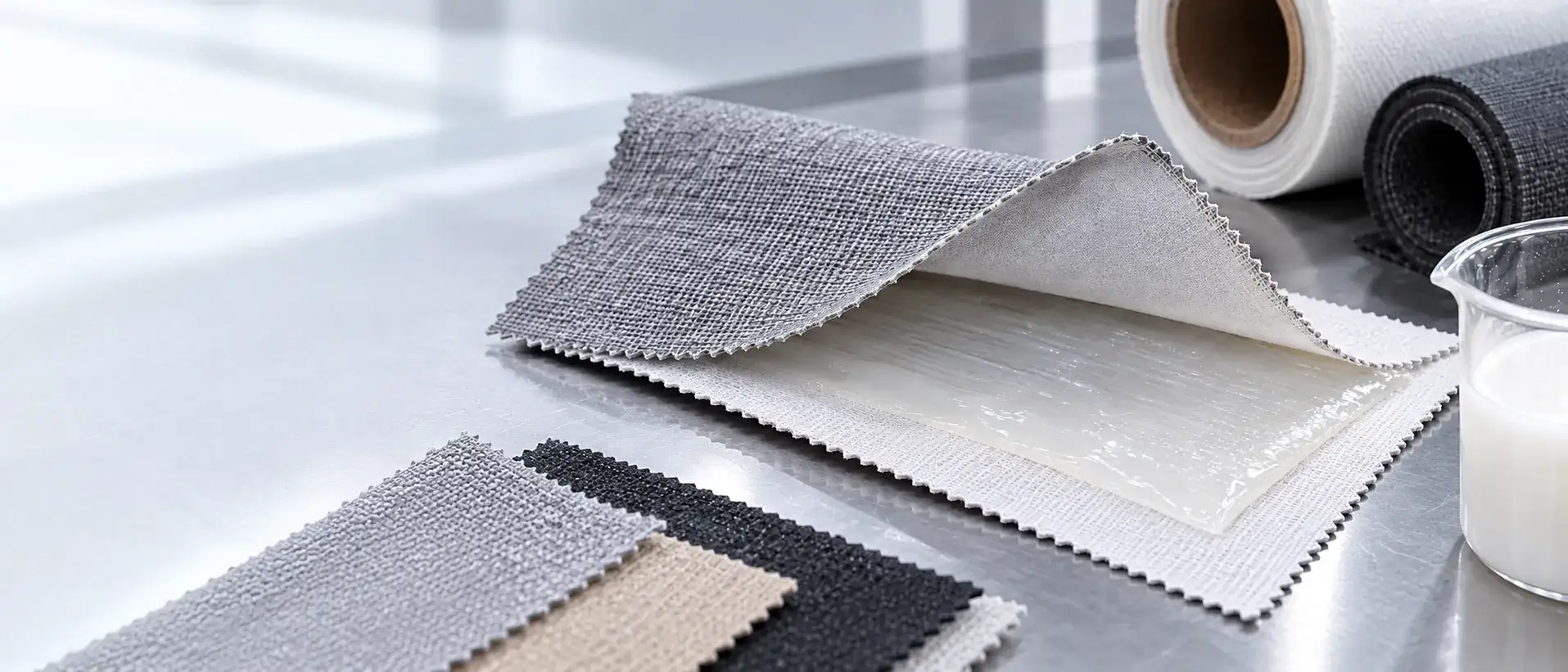
Water-Based Textile Laminating Adhesives
Water-based laminating adhesives join fabric to fabric, fabric to foam and fabric to film or membrane. The finished laminate may have to wash, flex, breathe or stay soft, and those requirements — not the adhesive name — decide the chemistry, the coating method and the coat weight.
An application we assess on request. Share your substrates, process and target requirements and we will confirm suitability, available documentation and sourcing feasibility — no stock grade is listed yet.
Discuss Your Application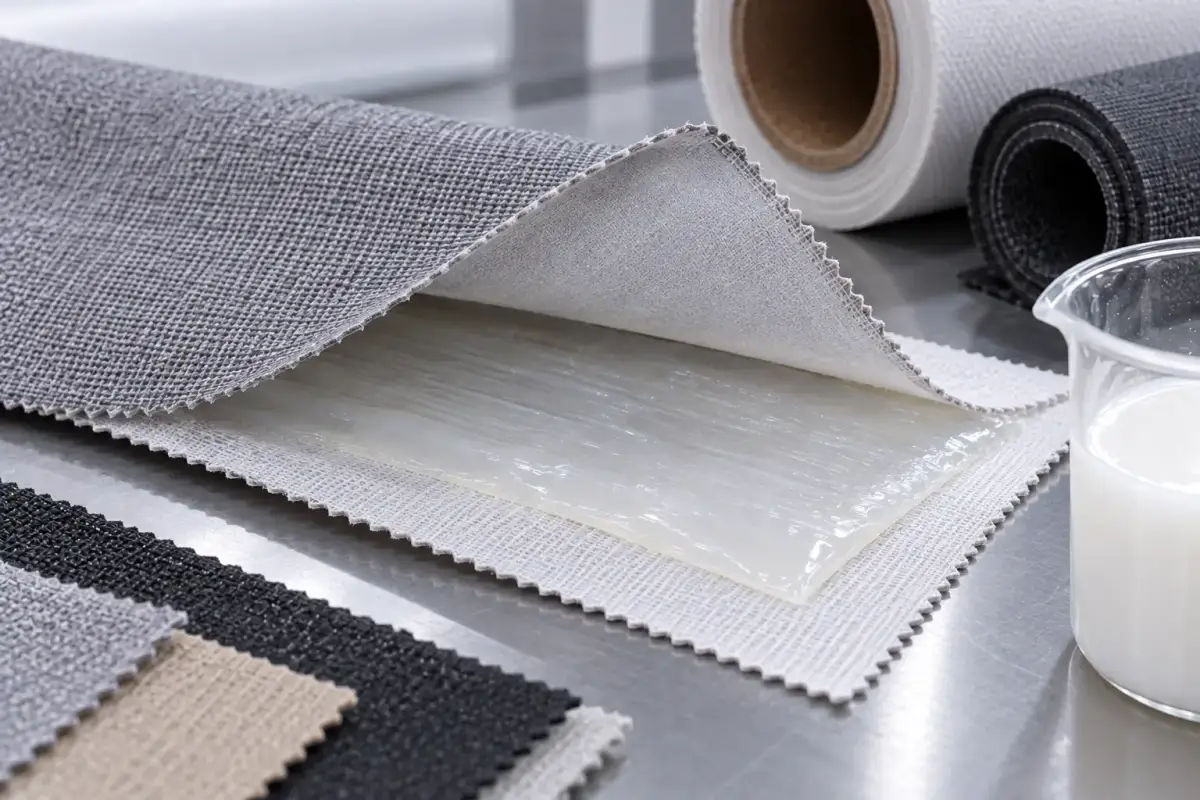
What Is Being Laminated
| Construction | Typical uses | What matters most |
|---|---|---|
| Fabric to fabric | Bonded fabrics, linings, interlinings | Handfeel and wash resistance |
| Fabric to foam | Upholstery covers, automotive trim, footwear linings | Peel after flexing, heat resistance, odour |
| Fabric to film or membrane | Waterproof-breathable apparel and outdoor goods | Breathability — a continuous adhesive film blocks vapour, so the adhesive goes on in dots or a pattern |
| Nonwoven to fabric or film | Hygiene, filtration, technical textiles | Coat weight control on light, open materials |
PU and Acrylic Dispersions
Polyurethane dispersions are the usual choice where the laminate must flex and wash repeatedly. They are commonly used with a crosslinker, which improves wash and heat resistance but shortens pot life and needs full cure before the laminate is tested.
Acrylic dispersions cost less and give soft, light-stable bonds, and suit laminates with lighter wash demands. Many laminators run both, chosen per product. See our acrylic adhesives page for acrylic lamination more generally.
Laminating Adhesive, Coating Resin and Backing Compound Are Different Products
- —Laminating adhesive joins two finished layers.
- —Coating resin is a functional coating on one fabric — waterproofing, abrasion resistance, a leather-look surface — with nothing bonded to it.
- —Backing compound, often filled SBR or acrylic latex, locks fibres into carpet and nonwoven backings during manufacture. It is unrelated to the adhesive that installs carpet, covered on our flooring adhesives page.
Coating and Laminating
Knife and roller coating lay continuous films; gravure rollers print dots for breathable or soft laminates; foamed adhesive spreads a low coat weight evenly on open fabrics; spray suits foam. In wet lamination the second layer meets the adhesive before drying, which suits porous materials that let the water escape. In dry lamination the adhesive is dried first and the layers are joined under heat and pressure, which suits films and membranes. Crosslinked systems then need their full cure before wash or peel testing means anything.
End-Use Tests to State
- —Washing or dry cleaning: method, temperature and number of cycles, and whether peel is measured before and after.
- —Breathability and waterproofing: the vapour transmission and hydrostatic head methods your customer uses.
- —Automotive trim: heat ageing, fogging and interior flammability requirements such as FMVSS 302 — see our automotive interior page.
- —Handfeel: how the finished laminate is judged, and against which reference sample.
When Hot-Melt Films or Reactive PUR Are Used Instead
Hot-melt adhesive films, webs and powders, and reactive PUR hot melts, laminate textiles without water to dry off, which saves oven capacity and suits some wash-resistant constructions. They need heated equipment and are a different purchase. We do not list them; mention them in your enquiry if your line could use one.
What to Tell Us
| Parameter | Why it matters | What to tell us |
|---|---|---|
| Both materials | Fibre, weave, finish and any film or membrane decide wetting and adhesion. | Material, weight, finishes such as water repellents |
| Coating method | Knife, roller, gravure dot, foam coating and spray need different viscosities and solids. | Machine and head type |
| Wet or dry lamination | Wet lamination joins before drying; dry lamination dries first and joins under heat and pressure. | Your process order |
| Drying and curing | Crosslinked adhesives reach wash resistance only after full cure. | Oven length, temperature, line speed |
| Target coat weight | Too much stiffens the laminate and blocks breathability; too little fails peel. | Dry coat weight if known |
| End-use tests | Wash, dry-clean, breathability, heat and flammability tests each point to a different formulation. | The standards your customer names |
Frequently Asked Questions
How do I keep a membrane laminate breathable?
Can a water-based laminating adhesive survive washing?
Why does the laminate feel stiff?
Is a carpet backing compound the same as a laminating adhesive?
Do you supply hot-melt films or PUR for lamination?
Sources
- Covestro, Wet bonding with water-based PU and polychloroprene
- Bostik, Specialty hot melts — films, webs and powders
These references describe the technology in general. Performance figures from other manufacturers apply to their products, not to PACT grades, and a citation does not imply endorsement. Content reviewed September 14, 2026.
Related guidance for laminators
- Acrylic adhesives for lamination and coating
Wet and dry lamination with acrylic dispersions.
- Automotive interior requirements
Fogging, odour and heat ageing for trim laminates.
- Leather goods and linings
Bleed-through and flexibility on thin materials.
- All water-based adhesive options
Chemistries compared by application.
- How to read the numbers on a datasheet
What each figure predicts, what it does not, and why one without its test method is not comparable.
- Look up a term and its other names
Non-acid silicone is neutral cure; liquid nails is grab adhesive. Fifty terms with their synonyms.
- Storage, shelf life and what heat does to it
Why a container crossing the tropics at 60-70°C is the hardest storage condition your adhesive will see.
- Send a specification and get a quote
Substrate, volume and destination market are enough for us to price it.
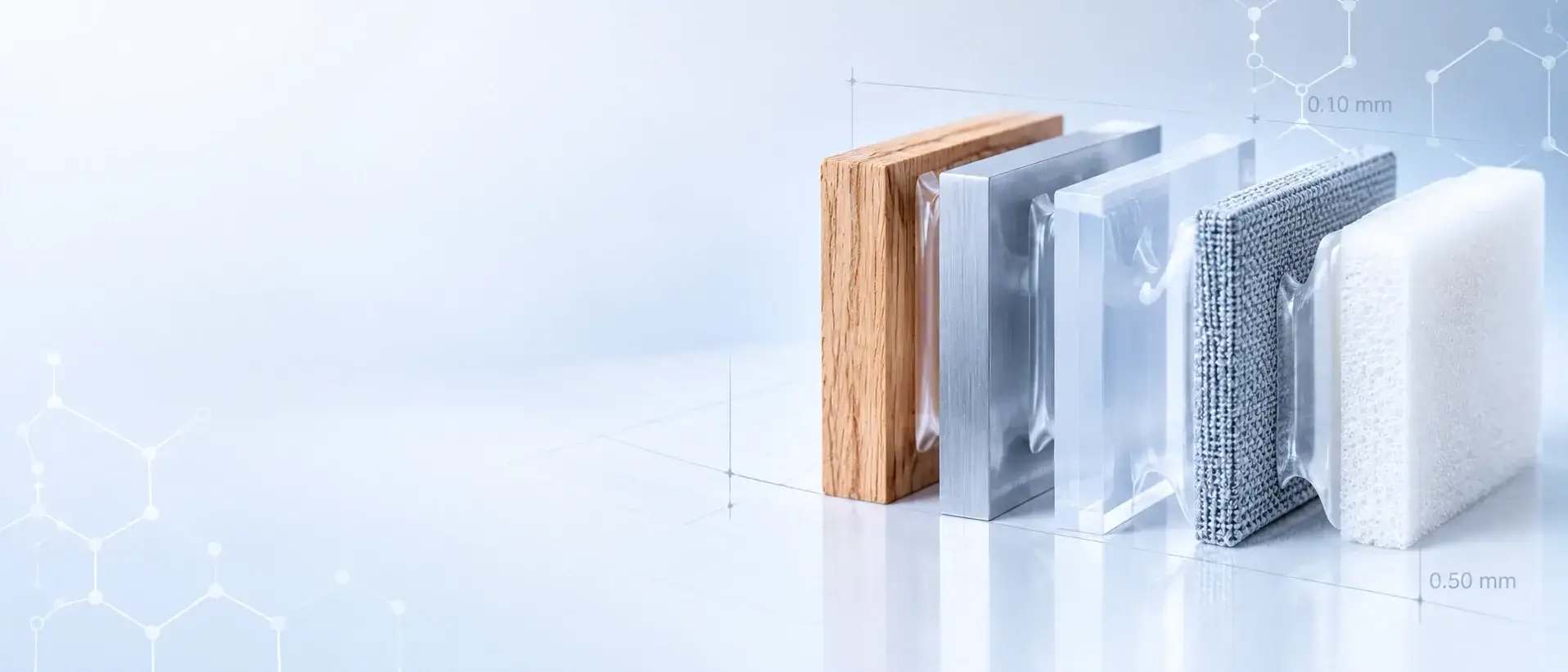
Share Your Materials and Process
Share the materials you need to bond or coat, your application process and any target specification. We will review the request and confirm sourcing feasibility, available documentation and next steps.