
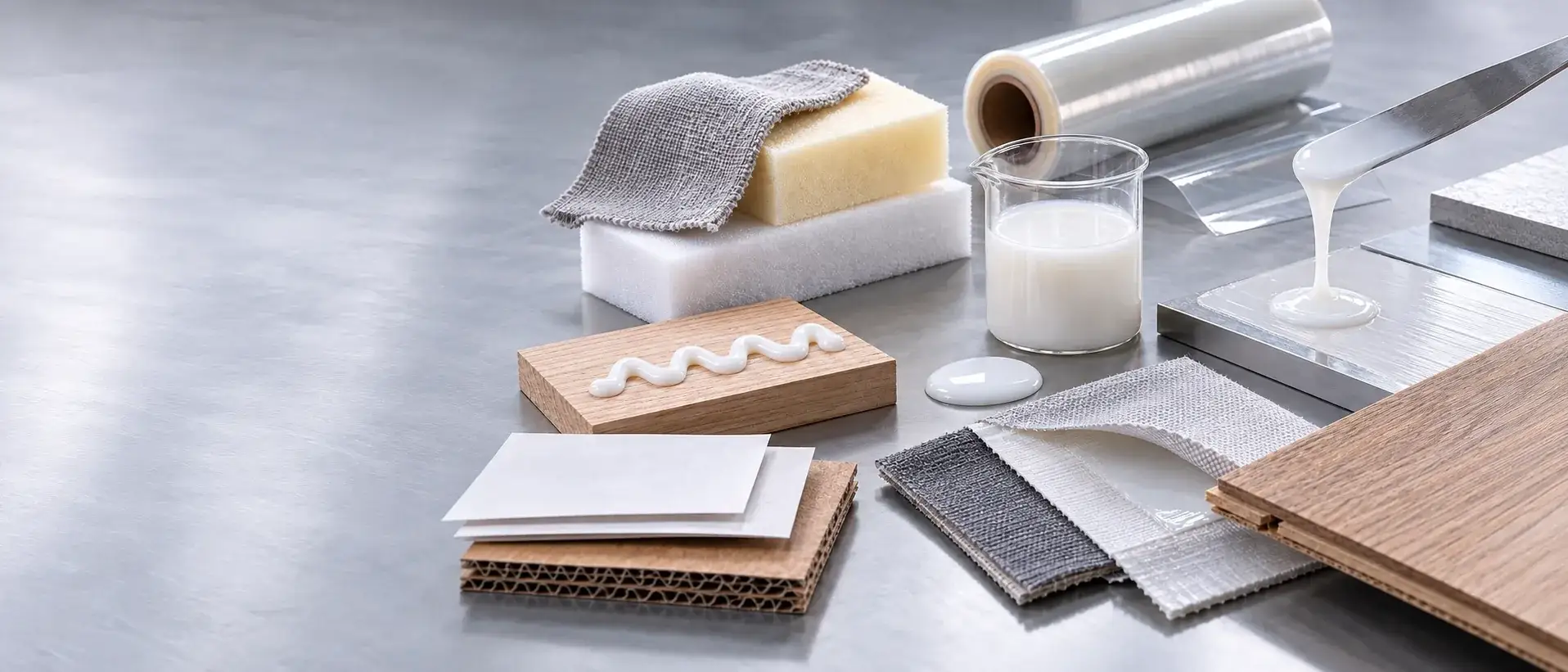
Water-Based Adhesive Solutions
Water-based adhesives carry the bonding polymer in water rather than an organic solvent. They cover very different jobs — label coating, foam bonding, footwear, woodworking, packaging — so the right starting point is your application and materials, then the chemistry.
Some water-based grades are listed products; others are applications we assess on request. Each option page states which.
Discuss Your ApplicationSkip to the application table ↓
Water-Based Is a Carrier, Not a Chemistry
"Water-based" tells you what the polymer is carried in. The polymer itself decides tack, heat resistance, flexibility and which surfaces it will bond, and the five common families behave very differently. Our base polymers guide covers the solvent-borne families alongside them.
| Chemistry | Typical uses | Usually applied by | Confirm before choosing |
|---|---|---|---|
| Acrylic dispersion | Pressure-sensitive labels, tapes and protective films; laminating; some flooring and foam bonding | Coating lines for labels, tapes and films; trowel or roller for flooring | Permanent or removable, the surface it must stick to, ageing and service temperature |
| Polychloroprene dispersion | Contact bonding of foam, fabric, wood and laminate | Spray gun or roller | Drying before contact, heat resistance, one or two components |
| Polyurethane dispersion (PUD) | Footwear, textile and film lamination, vacuum membrane pressing | Spray or roller, usually heat-activated | Hardener, activation temperature, heat and hydrolysis resistance |
| PVAc | Wood assembly, veneering, paper | Roller, spreader or glue gun | Water-resistance class required (for example D2 to D4 under EN 204), wood moisture, press time |
| VAE | Paper, packaging, film-to-paper, some wood bonding | Roller or nozzle on packaging machines | Coated or varnished paper surfaces, machine speed |
Water-Based, Low-VOC and Low-Emission Are Three Different Claims
- —Water-based describes the carrier. Small amounts of coalescing solvent are common, so VOC content is low but not automatically zero.
- —Low VOC is a measured content figure, and it only means something against a limit written for a specific market and adhesive category — see our VOC limits by market.
- —Low emission is what the cured product releases into the air over days, measured in a test chamber. Labels such as EMICODE or GREENGUARD are issued to named products, not to a chemistry.
The three do not imply each other. A water-based product can fail an emission test, and a solvent-borne product can meet a US content limit using exempt solvents — the route described on our low-VOC manufacturing page. Ask for the document that matches the requirement you actually have to meet. For the same question across solvent-borne lines as well, see low VOC adhesives by product line.
Switching From a Solvent-Based Adhesive: What to Recheck
- Drying capacity. Water leaves the film more slowly than solvent and slows further in humid air, so open time, oven length or line speed may have to change.
- Substrates. When both surfaces are non-porous, the water has nowhere to go until the film is dry — bonding too early traps it.
- Equipment. Pumps, hoses and spray tips must suit a water-based product, and some bulk systems need stainless or plastic wetted parts.
- Storage and transport. Many dispersions are damaged by freezing, which turns winter shipping and unheated warehouses into a risk that solvent products did not have. See our storage guide.
- Finished-bond performance. Heat, humidity and ageing resistance must be re-tested on your own parts; no fixed percentage of solvent-based strength holds across applications.
- The rest of the line. Primers and cleaners may still be solvent-borne, so a water-based adhesive alone does not make a process solvent-free.
Our solvent-based vs water-based comparison goes through the trade-offs for contact bonding in more detail.
Finished Adhesive or Raw Dispersion?
Enquiries for "water-based acrylic" often mean one of two different purchases. A finished adhesive is ready to apply, with tackifiers, thickeners, defoamers and preservatives already formulated in. A dispersion or emulsion is the raw polymer, bought by converters and adhesive makers who formulate their own. Documentation, packaging, minimum quantities and technical support differ between the two, so the enquiry form asks which you need.
Choose Your Application
| Application | Typical Materials | Process | What to Specify | Explore |
|---|---|---|---|---|
 Laminate and panel bonding | HPL, MDF, particleboard, plywood, fabric, foam | Brush, roller or spray, contact bonding | Board type, drying time available, heat in service | Water-based contact adhesive |
 Foam and upholstery | PU foam, fabric, board | Bulk spray system | Foam type, spray equipment, glue-line feel | Water-based foam adhesives |
 Footwear sole and upper bonding | Rubber, EVA, TPR, PU, leather, textile | Primer, coating, heat activation, press | Sole compound, primer system, the brand's own test | Water-based PU shoe adhesives |
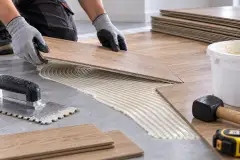 Flooring and interior mounting | Vinyl and LVT, carpet tile, panel, wallpaper | Trowel or roller | Subfloor moisture, whether it must lift again, emission class | Flooring and installation adhesives |
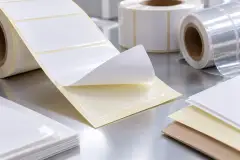 Label stock | Paper and film face stock, HDPE and PET containers, glass | Coating line, then labelling | Final surface, permanent or removable, application and service temperature | Label adhesives |
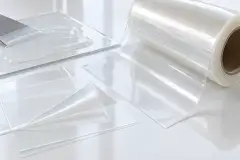 Surface protection film | Stainless steel, aluminium, coated and painted panel, plastics | Film coating line | Peel level, how long the film stays on, residue limit | Protective film adhesives |
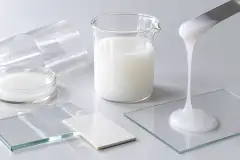 Pressure-sensitive tapes | Paper, film and cloth backings | Coating line | Tack against holding power, backing, service temperature | Acrylic adhesives |
 Textile lamination | Fabric, film, foam and backing layers | Coating and laminating line | What is being laminated to what, and the end-use tests it must pass | Textile laminating adhesives |
 Wood assembly and veneering | Solid wood, veneer, MDF, particleboard | Roller, cold or hot press, vacuum membrane press | D1 to D4 water-resistance class, timber moisture content, press time | Water-based wood adhesives |
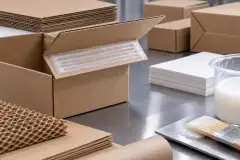 Cartons, bags and tubes | Paper, board, laminated and coated board | Carton gluing line, wet-glue labelling, tube winding | Line speed, set speed, whether food contact applies | Paper and packaging adhesives |
Only the water-based contact adhesive is a listed grade; the other applications are assessed against your materials and process. Each page says which.
Frequently Asked Questions
Is water-based adhesive the same as low-VOC adhesive?
Can a water-based adhesive replace my solvent-based adhesive?
What is the difference between a finished adhesive and an acrylic dispersion?
What information do you need to recommend a water-based option?
Do you have a stock grade for every application on this page?
Choosing and specifying a water-based adhesive
- Acrylic adhesives for labels, tapes and protective films
Permanent against removable, and the tack, peel and shear methods behind each figure.
- The water-based contact adhesive we list
Polychloroprene dispersion for porous substrates and laminate to board.
- Solvent-based against water-based, trade-off by trade-off
Drying, heat resistance and substrates for contact bonding.
- Check the VOC limit for your destination market
Which instrument actually governs adhesives in the US, EU and China — and which ones are wrongly cited.
- Get a formulation under your market’s VOC limit
Four routes, including the exempt-compound substitution that keeps solvent-borne performance under a US limit.
- What the base polymer actually decides
Chloroprene, SBS, PU, water-based and silicone — heat, flex and durability are set the moment the family is chosen.
- How to read the numbers on a datasheet
What each figure predicts, what it does not, and why one without its test method is not comparable.
- Storage, shelf life and what heat does to it
Why a container crossing the tropics at 60-70°C is the hardest storage condition your adhesive will see.
- Eight checks before you pick a supplier
Manufacturer or trader, grade-level test data, VOC position and dangerous-goods handling — apply them to us too.
- Send a specification and get a quote
Substrate, volume and destination market are enough for us to price it.
Share Your Materials and Process
Share the materials you need to bond or coat, your application process and any target specification. We will review the request and confirm sourcing feasibility, available documentation and next steps.