
Contact Adhesive
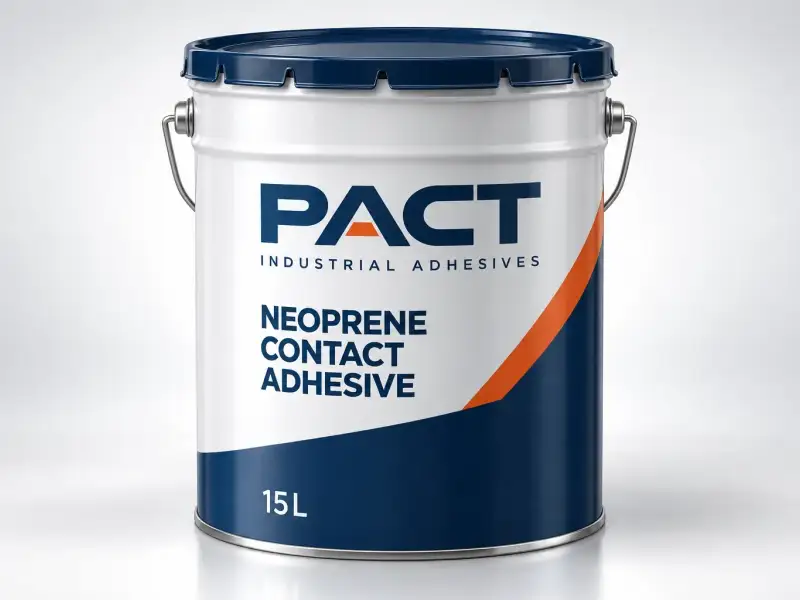
Neoprene Contact Adhesive
High-performance chloroprene rubber (CR) based contact adhesive with excellent heat resistance, bond strength, and durability for industrial bonding applications.
View Details →Nansha, Guangzhou, ChinaOwn plant since 2011
Industrial-grade contact adhesives in neoprene (chloroprene), SBS, and water-based formulations. Engineered for furniture, footwear, construction, and general bonding applications.
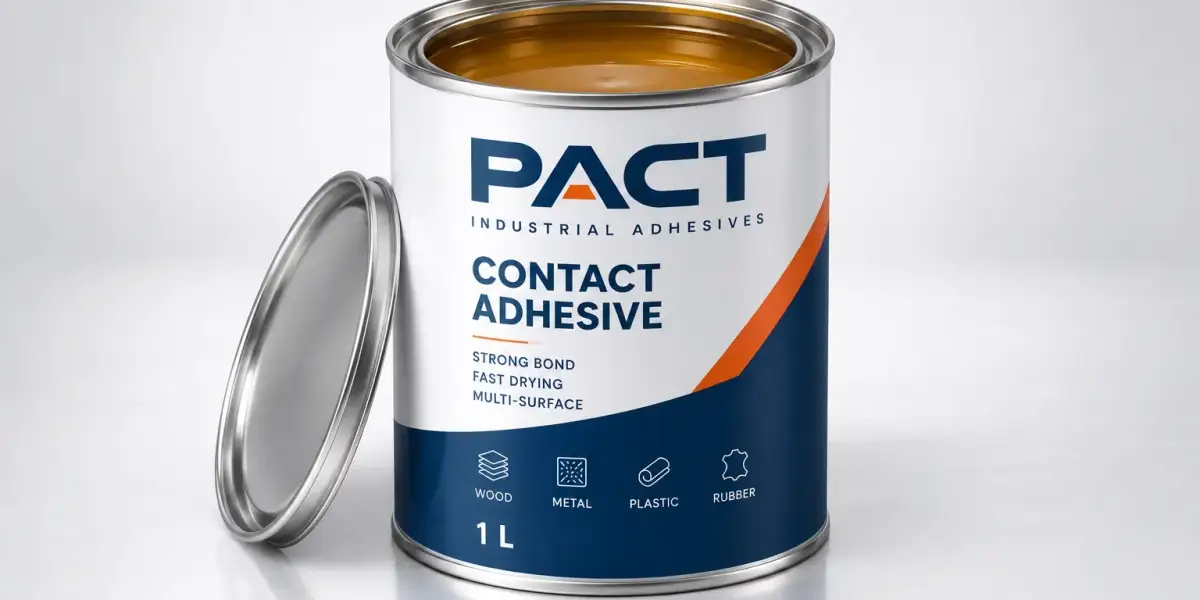
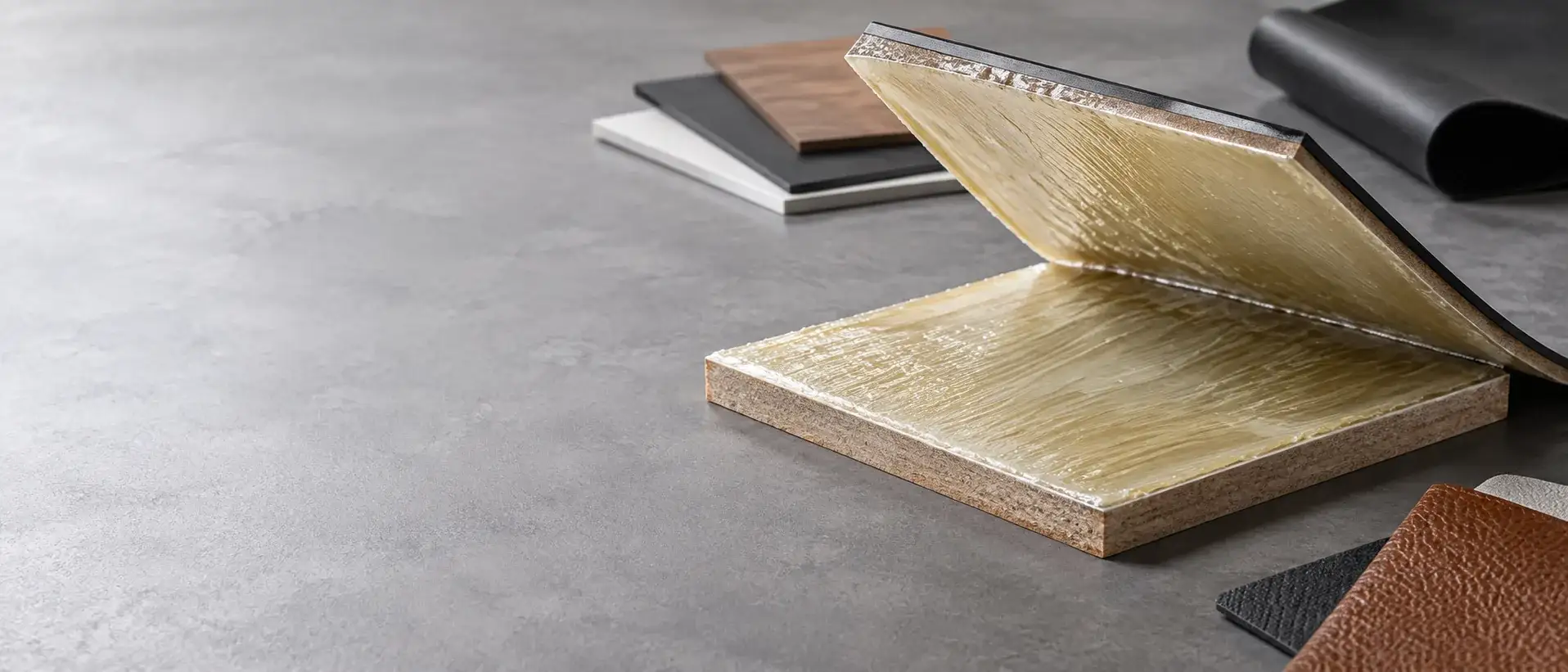
Contact adhesive is a solvent-based or water-based bonding agent that forms an instant, high-strength bond when two coated surfaces are pressed together. Unlike structural adhesives that require clamping or extended cure times, contact adhesive works on the "contact bonding" principle: apply a thin coat to both surfaces, allow the solvent to flash off until the adhesive becomes tacky, then join the substrates under brief pressure. The bond is immediate and repositioning is not possible once the surfaces touch, making proper alignment critical during assembly.
Contact adhesives have been a mainstay in manufacturing for decades, favored by furniture factories, footwear producers, and construction contractors for their fast production cycle times and versatile substrate compatibility. They bond effectively to wood, plywood, MDF, high-pressure laminate (HPL), melamine, rubber, leather, fabric, cork, foam, metal, and many engineering plastics. This broad substrate range makes contact adhesive one of the most widely used industrial adhesives worldwide.
PACT manufactures three primary contact adhesive formulations, each engineered for specific performance requirements and price points. Understanding the differences between these base polymers is essential for selecting the right adhesive for your application.
Neoprene-based contact adhesive uses chloroprene rubber (CR) as the primary polymer, dissolved in an organic solvent blend. This formulation delivers the highest performance among contact adhesives: bond strength exceeding 3.0 N/mm on wood-to-laminate substrates, heat resistance up to 120°C, and excellent resistance to water, oils, and common chemicals. Neoprene contact adhesive is the standard choice for HPL lamination in furniture factories, automotive interior bonding, and any application where the adhesive joint may be exposed to elevated temperatures or chemical contact. We offer both standard and toluene-free neoprene formulations to meet varying regulatory requirements across export markets.
SBS-based contact adhesive offers a cost-effective alternative to neoprene, with raw material costs usually lower. SBS adhesive provides good initial tack and adequate bond strength (≥2.0 N/mm) for applications where extreme heat resistance is not required. The heat resistance ceiling of SBS is approximately 70°C, which limits its use in tropical climates or near heat sources. However, for indoor furniture assembly, woodworking, leather goods production, and general workshop bonding at moderate temperatures, SBS contact adhesive is a reliable and economical choice. Its extended open time of 15-30 minutes also makes it well-suited for large panel bonding where operators need time to align substrates.
Water-based contact adhesive replaces organic solvents with water as the primary carrier, bringing VOC content on our grade below 50 g/L — check that figure against the limit your market sets for the adhesive category. With water as the carrier, the flammability and solvent-exposure risks of a solvent line are usually much lower — but check the grade SDS for its classification and ventilation advice rather than assuming any enclosed workshop is suitable. On porous substrates like wood and fabric it can meet most indoor furniture requirements, but how close it comes to solvent-based performance depends on the board, the drying conditions and heat exposure, so peel-test both on your own materials. The trade-off is a longer open time (20-40 minutes) and sensitivity to temperature — the adhesive must not be stored or applied below 5°C.
Contact bonding is only one water-based route. For foam and upholstery spraying, footwear, wood assembly, label and tape coating and flooring, see water-based adhesive options by application — they use different chemistries and different equipment.
Contact adhesive serves a wide range of industrial applications. In furniture manufacturing, it is the primary adhesive for bonding decorative laminate (HPL, melamine, veneer) to MDF, plywood, and particleboard substrates. Furniture factories across Southeast Asia and Africa rely on contact adhesive for countertop lamination, cabinet door facing, and edge banding operations where fast cycle times are critical to production throughput.
In the footwear industry, contact adhesive handles upper-to-sole pre-bonding, insole lamination, and general assembly tasks. While PU adhesive is preferred for final sole bonding on premium footwear, neoprene contact adhesive remains essential for the many intermediate bonding steps in shoe production. The automotive sector uses contact adhesive for headliner installation, carpet bonding, door panel trim, and seat cushion assembly where the adhesive must withstand interior vehicle temperatures that can exceed 80°C in tropical markets.
High-performance chloroprene rubber (CR) based contact adhesive with excellent heat resistance, bond strength, and durability for industrial bonding applications.
View Details →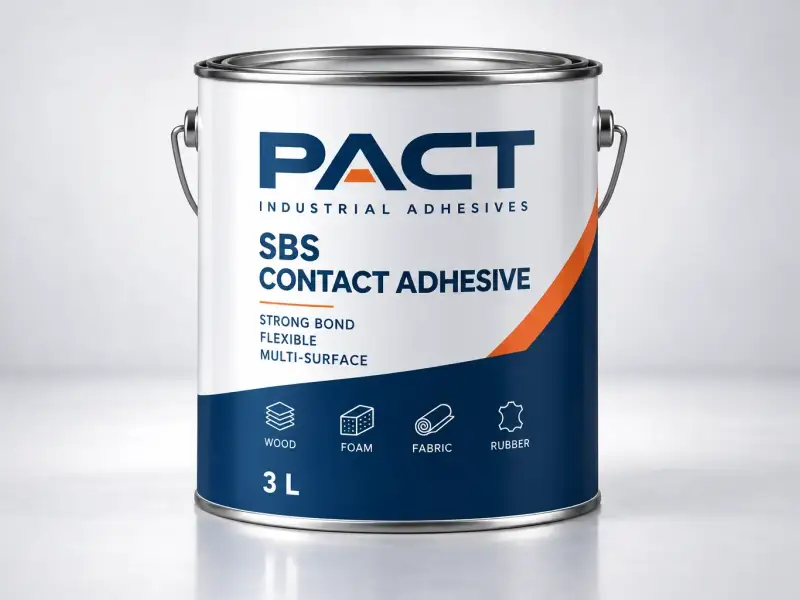
Cost-effective SBS (Styrene-Butadiene-Styrene) based contact adhesive offering reliable bonding performance for furniture, woodworking, and general assembly applications.
View Details →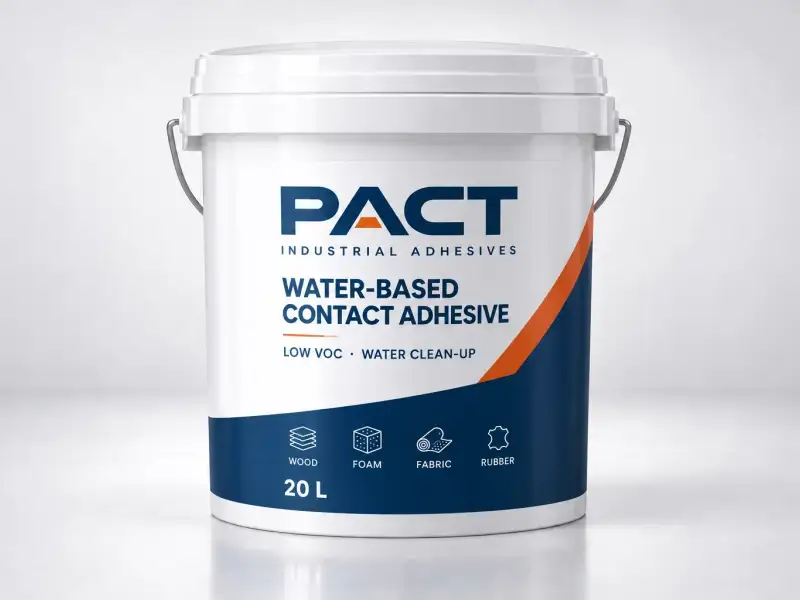
Water-based polychloroprene contact adhesive for porous substrates, with VOC content stated on the grade TDS so it can be checked against the limit your market applies to that adhesive category.
View Details →HPL lamination, veneer bonding, edge banding, and panel assembly
Explore Solutions →Shoe upper bonding, insole lamination, and lasting operations
Explore Solutions →Headliner, carpet, door trim, and interior panel bonding
Explore Solutions →Bags, belts, wallets, and accessory manufacturing
Explore Solutions →Decorative panel installation, insulation board bonding, and flooring
Explore Solutions →Our technical team can develop a contact adhesive tailored to your substrates, production line, and performance requirements. Contact us to discuss your project.

Sales & technical team
Hi there 👋
Questions on products, MOQ, samples or shipping? Message us on WhatsApp — we reply within 24 hours.
Mon–Sat, 9:00–18:00 (GMT+8)+86 139 2958 1257