
Shoe Adhesive
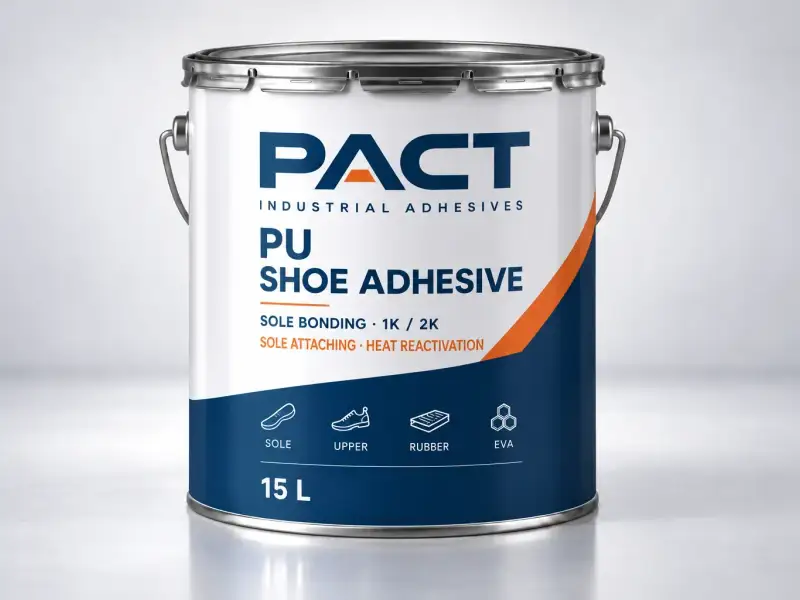
PU Shoe Adhesive
High-performance polyurethane (PU) adhesive specifically formulated for footwear manufacturing. Delivers superior flex resistance, heat resistance, and bond durability for sole-to-upper bonding.
View Details →Nansha, Guangzhou, ChinaOwn plant since 2011
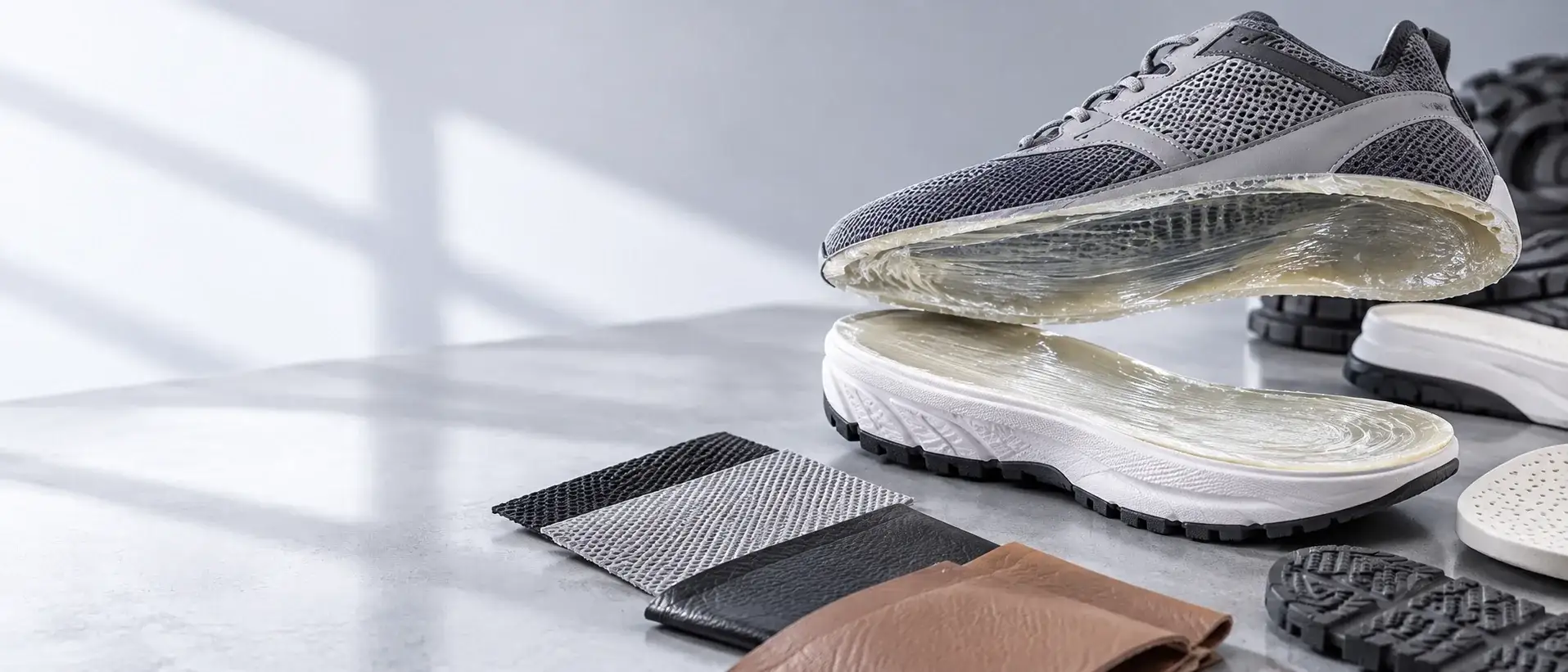
Specialized adhesives for footwear manufacturing: PU (polyurethane) and neoprene grades for sole bonding, upper attachment and lasting, with water-based PU systems assessed against your line.
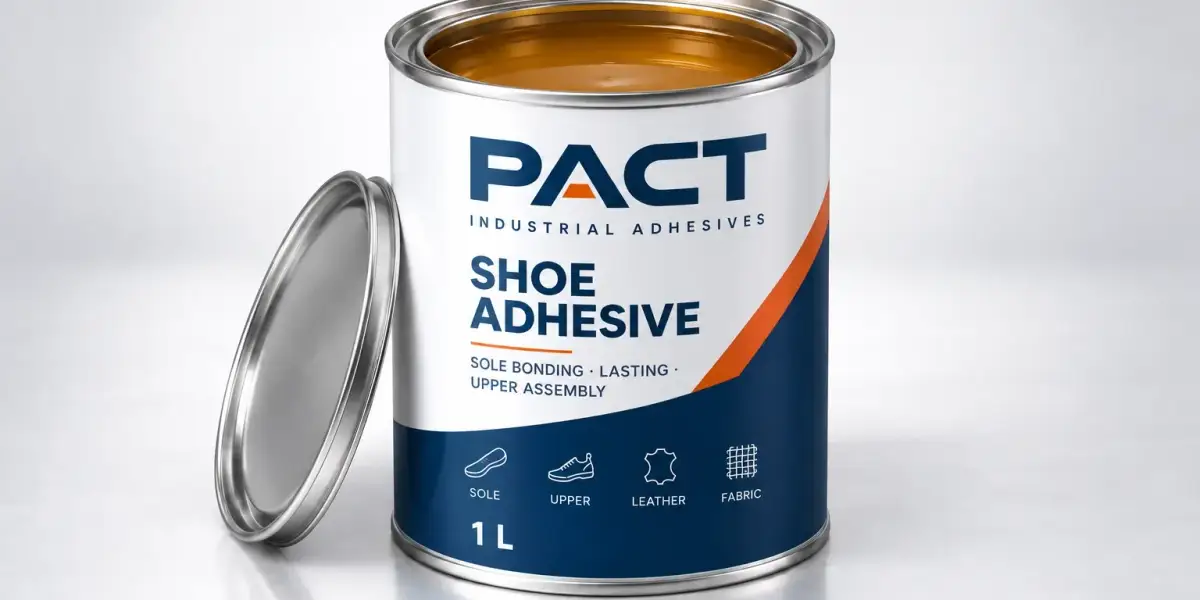
Footwear manufacturing is one of the most demanding adhesive applications in industry. A shoe adhesive must withstand constant flex fatigue as the wearer walks, resist delamination from perspiration and moisture, maintain bond integrity across a wide temperature range, and bond reliably to a diverse range of substrates — natural leather, synthetic leather, fabric, EVA foam, rubber, TPR, PU, and various sole compounds. The adhesive joint in a shoe is subjected to repeated peel, shear, and impact forces throughout the product's service life, making adhesive selection a critical factor in footwear quality and durability.
PACT manufactures specialized shoe adhesives engineered specifically for the footwear production environment. Our formulations are developed in collaboration with shoe factories across Southeast Asia and Africa, where we understand the practical requirements of high-volume production lines processing thousands of pairs per day. Each adhesive is optimized for specific bonding operations in the shoe assembly process — from initial upper lasting through final sole attachment.
PU adhesive is the industry standard for permanent sole bonding in modern footwear manufacturing. Polyurethane's molecular structure provides an exceptional combination of high peel strength (our grade is specified at ≥4.0 N/mm on rubber-to-EVA), a flexible bond line, and heat resistance up to 60°C. Flex durability is a separate property from peel strength and is confirmed against the brand's own test protocol. PU shoe adhesive is available in one-component moisture-cure and two-component catalyst-cure systems. One-component PU is simpler to use — apply directly from the can with no mixing required — and is suitable for most production lines. Two-component PU provides faster cure and higher ultimate bond strength for high-throughput factories requiring maximum production efficiency. Both systems require heat reactivation at 65-75°C before pressing, which activates the adhesive film and ensures optimal bond formation.
Neoprene shoe adhesive based on chloroprene rubber provides high initial tack and fast bond development, making it essential for intermediate bonding operations in shoe production. It is the primary adhesive for upper assembly and lasting (pulling the upper over the last and bonding it to the insole), insole and midsole lamination, heel counter and toe puff attachment, and general footwear workshop bonding tasks. Neoprene shoe adhesive is specified to 90°C — below the furniture contact grade, which trades flexibility for heat resistance — and achieves peel strength of ≥2.5 N/mm on leather-to-rubber substrates. For casual and economy footwear lines, neoprene adhesive can serve as the sole bonding adhesive, though PU is recommended for athletic and premium footwear.
Water-based shoe adhesive addresses the growing demand for low-VOC production in footwear factories, particularly those supplying brands with strict environmental compliance requirements. These formulations replace organic solvents with water-based polymer dispersions, which cuts the solvent VOC released at the adhesive station. Whether they hold up depends on the sole and upper materials, the primer system and the activation equipment, not on the carrier alone, and water-based shoe adhesive needs longer drying and is more sensitive to temperature and humidity. It suits factories with controlled environments and room for longer drying stations. Primers and cleaners on the same line may still be solvent-borne, so a water-based adhesive does not by itself make the line solvent-free. Water-based systems are assessed against your materials and line rather than listed as a stock grade.
Primers are a critical component of the footwear bonding system. Many sole materials — EVA, TPR, certain rubbers, and PU soles — have low surface energy that prevents direct adhesive bonding. Primers chemically modify the substrate surface to create reactive bonding sites that dramatically improve adhesion. Proper primer selection and application is often the single most important factor in achieving reliable sole bond performance, which is why a sole bond has to be qualified as a system rather than as an adhesive. Tell us the sole compound and the preparation you run now, and we will confirm per enquiry which primers, halogenation agents and hardeners we can supply alongside the adhesive, and which you would continue to source yourself.
Sole bonding follows a precise sequence of steps, and each step affects final bond quality. The standard process in a modern shoe factory proceeds as follows:
"PU shoe glue" on an enquiry can mean three different jobs. Start from the step and the two materials, then the chemistry follows:
| Bonding step | Typical materials | Usual chemistry | What to confirm |
|---|---|---|---|
| Sole attaching | Rubber, TPR, PU, PVC or EVA sole to leather, synthetic or textile upper | PU (solvent or water-based) over a sole primer or halogenation | Sole compound, primer or halogenation step, activation equipment, the peel and ageing test the brand sets |
| Lasting and upper assembly | Upper to insole board; leather, synthetic, textile | Neoprene (CR) | How fast tack must develop, upper material, insole board type |
| Insole and midsole lamination | EVA, foam, textile, board | Neoprene, or SBS for non-structural layers | How hard the laminate flexes, bleed-through on thin textiles |
| Heel, counter and toe puff | Counters, heels and stiffeners to the upper | Neoprene; some thermoplastic stiffeners are heat-activated and need no separate adhesive | Stiffener material and how it is applied |
| Repair | Mixed and often unidentified materials | Neoprene or one-component PU | Identify the sole material first — most repair failures are surface preparation |
The primer, adhesive and hardener on a line should come as a system tested together. Changing one of them — even to a "compatible" alternative — is a change that needs a fresh peel test.
Where the adhesive ended up on a separated pair tells you which step failed. Look before swapping products:
| What you see | What it usually means | What to check |
|---|---|---|
| Adhesive on the upper, sole bare | The adhesive never wetted the sole | Halogenation or primer missing, expired or wrong for the compound; mould release left on the sole |
| Adhesive on the sole, upper bare | The adhesive never wetted the upper | Roughing depth on leather; finish or coating on a synthetic upper; primer on the upper side |
| Adhesive split across both surfaces | Cohesive failure inside the adhesive film | Film too thin, film under-activated, pressed too long after activation, or heat and humidity beyond the grade |
| Sole or upper material torn | The bond was stronger than the material | Not an adhesive problem — check the material |
| Pairs pass at the factory, fail after shipping | Heat or hydrolysis ageing in transit or storage | Age test pairs before shipping; check whether a hardener was used and whether the grade is rated for hydrolysis |
If you send us a failed pair to examine, include the sole and upper material names, the primer and adhesive batch numbers, the activation settings, and how long after activation the pair went into the press. Those five facts usually settle the cause faster than a new adhesive trial does.
A sole bond is made by the preparation, the adhesive and the activation together. A tin of adhesive on its own cannot be evaluated: if the primer or the activation in your trial differs from the one the adhesive was developed with, the trial measures your preparation rather than the adhesive. Ask any supplier — including us — for the whole system and the process that goes with it.
Send us with the request
What a useful sample package contains
Then run the trial so it settles something. Bond a batch rather than a pair, keep the process fixed, and test both fresh and aged pairs against the method your customer applies. When a pair fails, read where the adhesive stayed using the table above before changing product.
Which primers, halogenation agents and hardeners we can supply with a given grade is confirmed per enquiry. Where we cannot supply one, we will say so and name what the adhesive was qualified against, so your trial still reproduces the process.
The low VOC route for sole bonding is a water-based polyurethane dispersion. China's GB 33372-2020 shows the size of the gap for footwear and bags: 50 g/L for a water-based polyurethane adhesive against 400 g/L for a solvent-based polyurethane and 600 g/L for a solvent-based chloroprene. In export footwear the requirement more often comes from a brand's restricted substance list than from a content limit, and that list applies to every chemical at the station.
That last point is where switches go wrong. A line can move its adhesive to water-based and still run solvent-borne primers, cleaners and halogenation agents, so the VOC figure for the adhesive alone says little about the station. Judge the change as a system, on water-based PU shoe adhesive, and check the rows that apply to you in VOC limits by market. Other product lines are covered in low VOC adhesives by product line.
High-performance polyurethane (PU) adhesive specifically formulated for footwear manufacturing. Delivers superior flex resistance, heat resistance, and bond durability for sole-to-upper bonding.
View Details →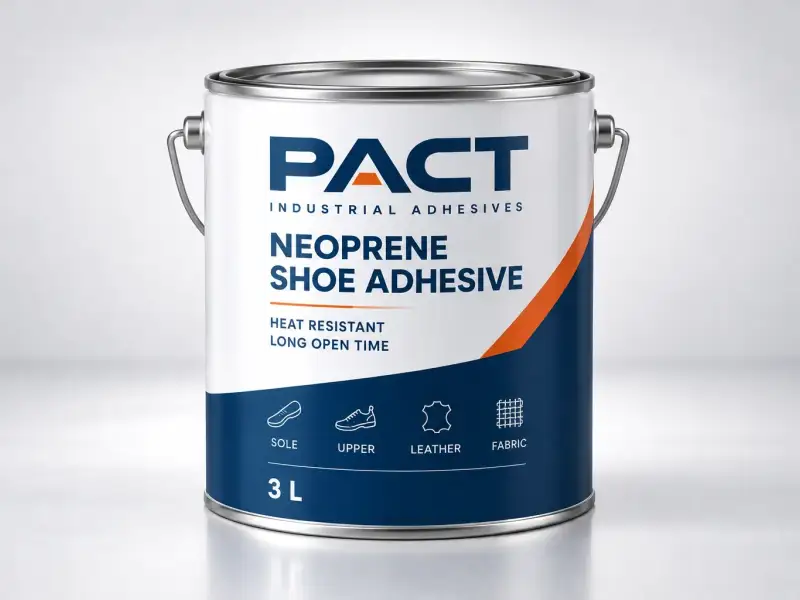
Chloroprene rubber (CR) based shoe adhesive for footwear assembly, upper bonding, and insole lamination. Provides strong immediate tack and reliable bond performance for high-volume production.
View Details →What changes in drying, activation and brand documentation.
≥4.0 N/mm peel, the standard choice for sports and PU outsoles.
Longer open time and lower cost where peel demand is moderate.
Lasting, sole attach, insole and toe puff each want a different product.
Line speeds, reactivation temperatures and the failures that come back.
Transit times, MOQ and the documentation the region asks for.
What changes on the line when the solvent goes — and what does not.
Which instrument actually governs adhesives in the US, EU and China — and which ones are wrongly cited.
Custom labels, cartons and formulation adjustments from our existing lines.
Why a container crossing the tropics at 60-70°C is the hardest storage condition your adhesive will see.
Chloroprene, SBS, PU, water-based and silicone — heat, flex and durability are set the moment the family is chosen.
Substrate, volume and destination market are enough for us to price it.
Send your sole and upper materials, the preparation you run now and your activation settings. We will come back with a candidate system, the process to reproduce and what to test on your own pairs.

Sales & technical team
Hi there 👋
Questions on products, MOQ, samples or shipping? Message us on WhatsApp — we reply within 24 hours.
Mon–Sat, 9:00–18:00 (GMT+8)+86 139 2958 1257