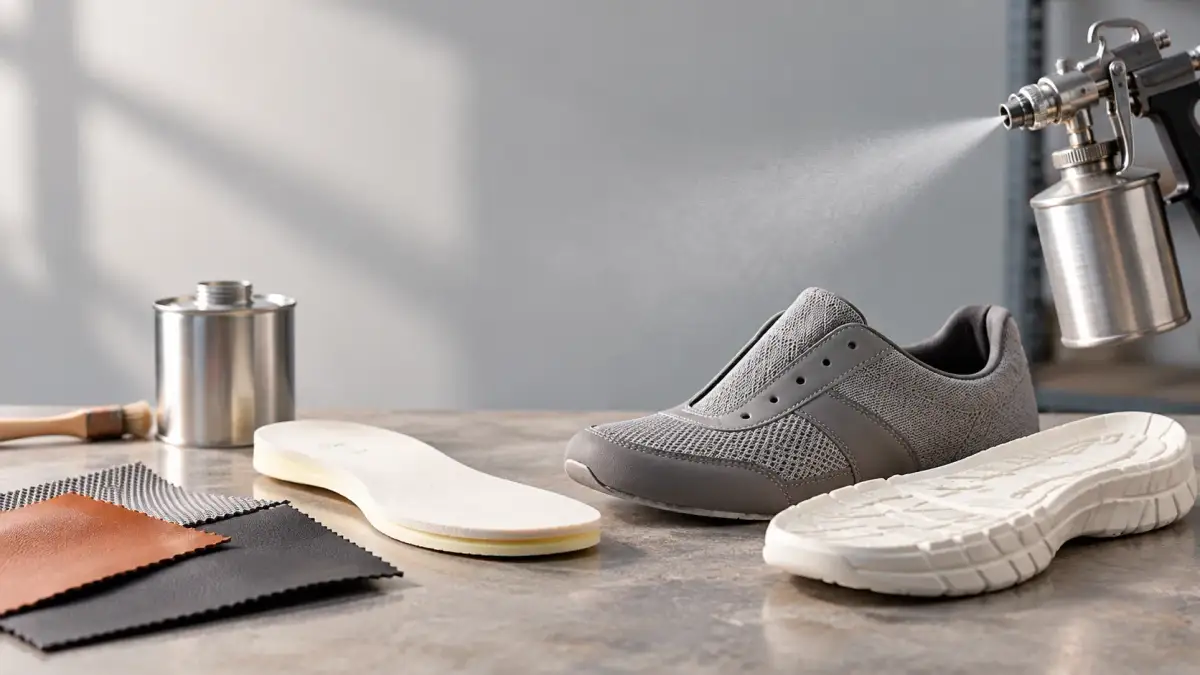
Adhesive Solutions for Southeast Asian Footwear Factories
|10 min read|PACT Technical Team
Southeast Asia has become the world's dominant footwear manufacturing region. Vietnam is the second-largest shoe exporter globally, Indonesia ranks third, and Cambodia and Bangladesh continue to expand capacity at double-digit annual growth rates. Together, these four countries produce over 4 billion pairs of shoes per year for brands including Nike, Adidas, Puma, New Balance, and dozens of regional labels.
Behind every pair of shoes leaving these factories is adhesive — typically 15-25 grams per pair for athletic footwear, applied across multiple bonding stages from upper assembly to sole attachment. For a factory producing 20,000 pairs per day, that translates to 300-500 kg of adhesive consumed daily. Sourcing reliable, performance-compliant adhesive at competitive cost is a critical procurement challenge for footwear manufacturers across the region.
This guide covers the adhesive requirements of Southeast Asian shoe factories by country, product selection for tropical manufacturing conditions, brand compliance standards, and the logistics of sourcing from China — the world's largest adhesive manufacturing base.
Adhesive Requirements by Country
Each country in the SEA footwear corridor has distinct production characteristics that influence adhesive selection. Factory scale, brand mix, and regulatory environment all shape purchasing decisions.
Vietnam
Vietnam is the region's largest footwear producer, manufacturing over 1.3 billion pairs annually. Major production clusters are concentrated in Ho Chi Minh City, Binh Duong, Dong Nai, and Hai Phong. The country produces for virtually all major global brands — Nike sources approximately 50% of its footwear from Vietnam, while Adidas, Puma, New Balance, and Asics maintain significant production volumes here. Vietnamese factories tend to be large-scale (5,000-50,000 pairs/day) and increasingly automated. The dominant adhesive types are PU adhesive for sole bonding and neoprene contact adhesive for upper assembly. Water-based adhesives are gaining adoption in Tier 1 supplier factories that must meet brand RSL and ZDHC requirements.
Indonesia
Indonesia produces approximately 1.1 billion pairs per year, with production centered in West Java (Tangerang, Serang, Karawang) and Central Java (Semarang, Solo). The country is a major supplier for Adidas, Nike, and Skechers, along with a significant domestic market served by local brands. Indonesian factories range from large Korean and Taiwanese-invested operations (10,000+ pairs/day) to medium-sized domestic factories (1,000-5,000 pairs/day). PU adhesive and neoprene contact adhesive remain the workhorses, though Indonesian factories are also heavy consumers of SBS-based contact adhesive for cost-sensitive production lines. Import duties on adhesive from China are reduced under ACFTA.
Cambodia
Cambodia's footwear sector has grown rapidly over the past decade, producing approximately 300 million pairs annually. Production is concentrated around Phnom Penh and in special economic zones. Most factories are Chinese and Taiwanese-invested, producing mid-range athletic and casual footwear for export. Factory sizes typically range from 2,000-15,000 pairs per day. Adhesive sourcing is predominantly from China, with neoprene contact adhesive and PU adhesive as the primary types. Cambodia's EBA (Everything But Arms) trade agreement with the EU provides duty-free access to European markets, which in turn drives demand for adhesives meeting EU regulatory standards.
Bangladesh
While primarily known for garments, Bangladesh has an expanding leather footwear sector producing approximately 400 million pairs per year. Factories in the Savar Export Processing Zone and Dhaka suburbs produce leather shoes and sandals for export markets. The dominant adhesive is neoprene contact adhesive for general bonding, with PU adhesive used for higher-end leather shoe sole attachment. Bangladesh factories tend to use more labor-intensive processes and higher volumes of manual-application adhesive compared to the more automated facilities in Vietnam.
Product Selection for Tropical Manufacturing
Southeast Asia's tropical climate — year-round temperatures of 28-38 degrees C and relative humidity of 65-90% — directly affects adhesive behavior on the production line. Factories must select adhesive formulations and adjust application parameters to account for these conditions.
PU Shoe Adhesive
PU adhesive remains the non-negotiable standard for sole bonding in quality footwear. In tropical conditions, the accelerated solvent evaporation actually benefits PU adhesive by shortening the initial drying phase. However, high humidity can interfere with the crosslinking reaction — moisture reacts with isocyanate hardener, potentially forming CO2 bubbles in the bond line. Factories in SEA should use hardener ratios adjusted for humidity (typically 4-6% vs. the standard 3-5%), ensure adhesive storage below 35 degrees C, and complete bonding within the specified pot life. Peel strength for properly applied PU adhesive: 4.0-6.0 N/mm.
Neoprene Contact Adhesive
Neoprene (CR) contact adhesive is the workhorse for upper assembly, lining attachment, and general bonding in SEA shoe factories. In hot conditions, open time shortens significantly — what takes 10-15 minutes at 20 degrees C may take only 5-8 minutes at 35 degrees C. Factories must train operators to adjust their workflow accordingly. The advantage of neoprene is its excellent heat resistance (stable up to 100-120 degrees C), which means bonds hold up well in the hot finished goods warehouses and shipping containers common in the region.
Water-Based Adhesive
Water-based adhesives face a particular challenge in tropical SEA: high ambient humidity slows water evaporation, extending drying time from a typical 15-20 minutes to 25-40 minutes in peak humidity. This can reduce production line throughput. Factories using water-based adhesive should invest in forced-air drying tunnels or IR drying systems to maintain acceptable cycle times. Despite the process adjustments required, water-based adhesive adoption is growing steadily in factories producing for brands with strict VOC requirements.
Adhesive Types for SEA Footwear: Comparison
Adhesive Type
Primary Use
Tropical Open Time
Heat Resistance
VOC Level
Brand RSL
PU (Polyurethane)
Sole bonding
6-12 min
80-100°C
Medium-High
Compliant
Neoprene (CR)
Upper assembly
5-8 min
100-120°C
Medium-High
Compliant
Water-Based PU
Upper assembly, lining
25-40 min
60-80°C
Very Low
Preferred
SBS Contact
General bonding
5-10 min
60-80°C
Medium
Case-by-case
Hot Melt
Toe puff, stiffeners
5-30 sec
70-90°C
None
Compliant
Brand Compliance and RSL Requirements
Factories producing for major footwear brands must comply with strict chemical safety requirements. These standards directly impact adhesive selection and sourcing decisions. Non-compliant adhesive can result in failed audits, shipment rejection, and loss of brand contracts.
RSL (Restricted Substances List)
Every major brand maintains its own RSL, which limits or prohibits specific chemicals in finished products and manufacturing materials. For adhesives, the most commonly restricted substances include:
--Benzene: Prohibited. Maximum limit typically below 5 ppm in adhesive formulations.
--Toluene and xylene: Restricted in most brand RSLs. Limits vary from 0.1% to complete prohibition in adhesive products.
--n-Hexane: Restricted or prohibited due to neurotoxicity. Maximum limits typically 0.1-1%.
--Chlorinated solvents: Restricted in most RSLs. Methylene chloride and chloroform are commonly prohibited.
--DMFu (Dimethyl fumarate): Prohibited. Maximum limit 0.1 mg/kg. Must be absent from adhesive and packaging.
ZDHC MRSL
The ZDHC (Zero Discharge of Hazardous Chemicals) Manufacturing Restricted Substances List has become the industry benchmark adopted by Nike, Adidas, Puma, H&M, and over 30 other brands. ZDHC MRSL conformance requires third-party testing of adhesive formulations against a comprehensive list of restricted chemicals. Adhesive suppliers targeting SEA footwear factories should be able to provide ZDHC MRSL Level 1 or Level 2 conformance certificates for their products.
Low VOC Requirements
Vietnam and Indonesia have introduced national VOC emission standards for manufacturing facilities. Nike's requirement is that total VOC in solvent-based adhesive should not exceed 25% (by weight) for shoe assembly operations. This is driving the shift toward low-VOC neoprene formulations and water-based alternatives. PACT offers both standard and low-VOC versions of our shoe adhesive range, with full RSL and VOC documentation included with every shipment.
Logistics from China to Southeast Asia
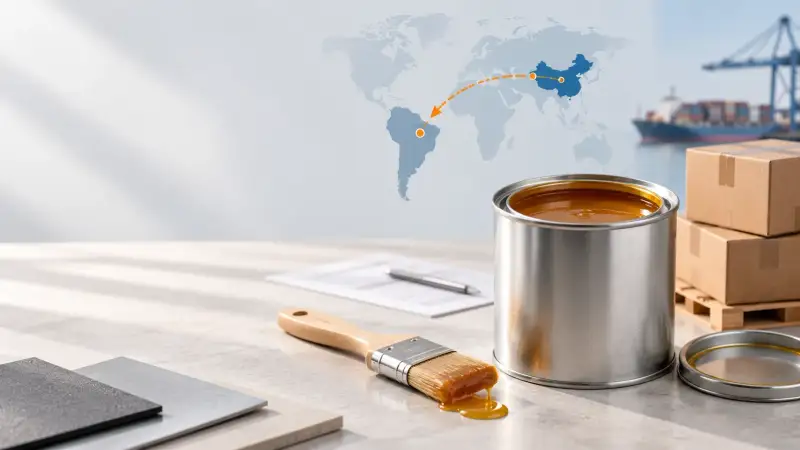
China's proximity to Southeast Asia provides significant logistics advantages for adhesive sourcing. Guangzhou — where PACT's manufacturing facilities are located — sits at the heart of the Pearl River Delta shipping hub, with direct container services to all major SEA ports.
Shipping Routes and Transit Times
Destination Port
Sea Freight Transit
ACFTA Duty Rate
Key Document
Ho Chi Minh City, Vietnam
3-5 days
0%
Form E (ACFTA COO)
Jakarta, Indonesia
7-10 days
0-5%
Form E (ACFTA COO)
Bangkok, Thailand
5-7 days
0%
Form E (ACFTA COO)
Manila, Philippines
5-7 days
0-5%
Form E (ACFTA COO)
Sihanoukville, Cambodia
5-8 days
0%
Form E (ACFTA COO)
Chittagong, Bangladesh
10-14 days
5-12%
Standard COO
ACFTA Tariff Benefits
The ASEAN-China Free Trade Agreement (ACFTA) is a significant cost advantage for SEA factories sourcing adhesive from China. Under ACFTA, adhesive products classified under HS codes 3505 and 3506 typically qualify for 0% or reduced import duty when accompanied by a Form E (Certificate of Origin). PACT provides Form E documentation for all shipments to ASEAN countries, ensuring our customers benefit from the lowest applicable tariff rates. For a factory importing 20 tons of adhesive per month, the ACFTA duty reduction can save USD 2,000-8,000 annually depending on the destination country's standard MFN tariff rate.
Shipping Documentation
Adhesive products are classified as dangerous goods (DG) for international shipping due to their flammable solvent content. Proper documentation is essential:
--MSDS (Material Safety Data Sheet): Required for every adhesive product shipped. Must be in English and the destination country's language.
--DG Declaration: Solvent-based adhesives are typically Class 3 Flammable Liquids. UN number, packing group, and proper shipping name must be declared.
--Form E (ACFTA): Certificate of origin required to claim preferential tariff rates under ACFTA.
--Packing List and Commercial Invoice: Standard trade documents with accurate product descriptions and HS codes.
Technical Support and On-Site Service
Adhesive is not a commodity product — it is a process material that requires proper application to deliver its full performance. For SEA footwear factories, technical support from the adhesive supplier is often the deciding factor between a successful partnership and a failed trial.
What Good Technical Support Includes
--Application training: On-site training for factory operators on proper adhesive application — correct coating weight, open time management, pressing pressure, and heat reactivation temperature.
--Troubleshooting: Rapid response when bond failures occur on the production line. Remote diagnosis via photos/video, followed by on-site visits when needed.
--Formulation adjustment: The ability to customize adhesive viscosity, open time, and solvent system to match specific factory conditions and substrate combinations.
--Documentation: TDS (Technical Data Sheets), MSDS, RSL test reports, and COA (Certificate of Analysis) for every batch — provided in English and local languages.
Local Language Support
Effective communication is essential when technical issues arise on a production line running thousands of pairs per hour. PACT's technical team includes Mandarin, English, and Vietnamese-speaking engineers who can communicate directly with factory management and production staff. For factories in Indonesia and Cambodia, we work with local distribution partners who provide on-the-ground technical support in Bahasa Indonesia and Khmer. Our OEM/ODM service includes dedicated technical support for private label and custom formulation customers across the region.
Frequently Asked Questions
What adhesives do Southeast Asian shoe factories use most?
PU (polyurethane) adhesive for sole bonding and neoprene contact adhesive for upper assembly are the two most consumed adhesive types in SEA footwear factories. Water-based adhesives are gaining share in factories producing for European/US brands that require low VOC compliance. Total adhesive consumption per factory ranges from 5-50 tons per month depending on capacity.
How does tropical climate affect adhesive performance?
High temperature (30-40°C) and humidity (70-90% RH) in Southeast Asia accelerate solvent evaporation in solvent-based adhesives (shorter open time) but slow drying of water-based adhesives. Storage temperature above 40°C can shorten shelf life. Factories should store adhesive in shaded, ventilated areas and adjust application parameters seasonally.
What is the shipping time from China to Southeast Asia?
Sea freight from Guangzhou to major SEA ports: Ho Chi Minh City 3-5 days, Jakarta 7-10 days, Bangkok 5-7 days, Manila 5-7 days, Phnom Penh (via Sihanoukville) 5-8 days. ACFTA (ASEAN-China Free Trade Agreement) reduces or eliminates import duties on many adhesive products.
Can Chinese adhesive meet Nike/Adidas supplier requirements?
Yes, but brand compliance requires specific certifications. Most major footwear brands require RSL (Restricted Substances List) compliance, ZDHC MRSL conformance, and low VOC formulations. PACT products are formulated to meet major brand RSL requirements and we provide the necessary test documentation.
A practical guide for footwear factory engineers and procurement managers — covering PU, neoprene, and water-based adhesives for every shoe bonding stage.
A practical guide to REACH compliance for adhesive importers — what the regulation covers, how to verify supplier compliance, and which documents to request.