
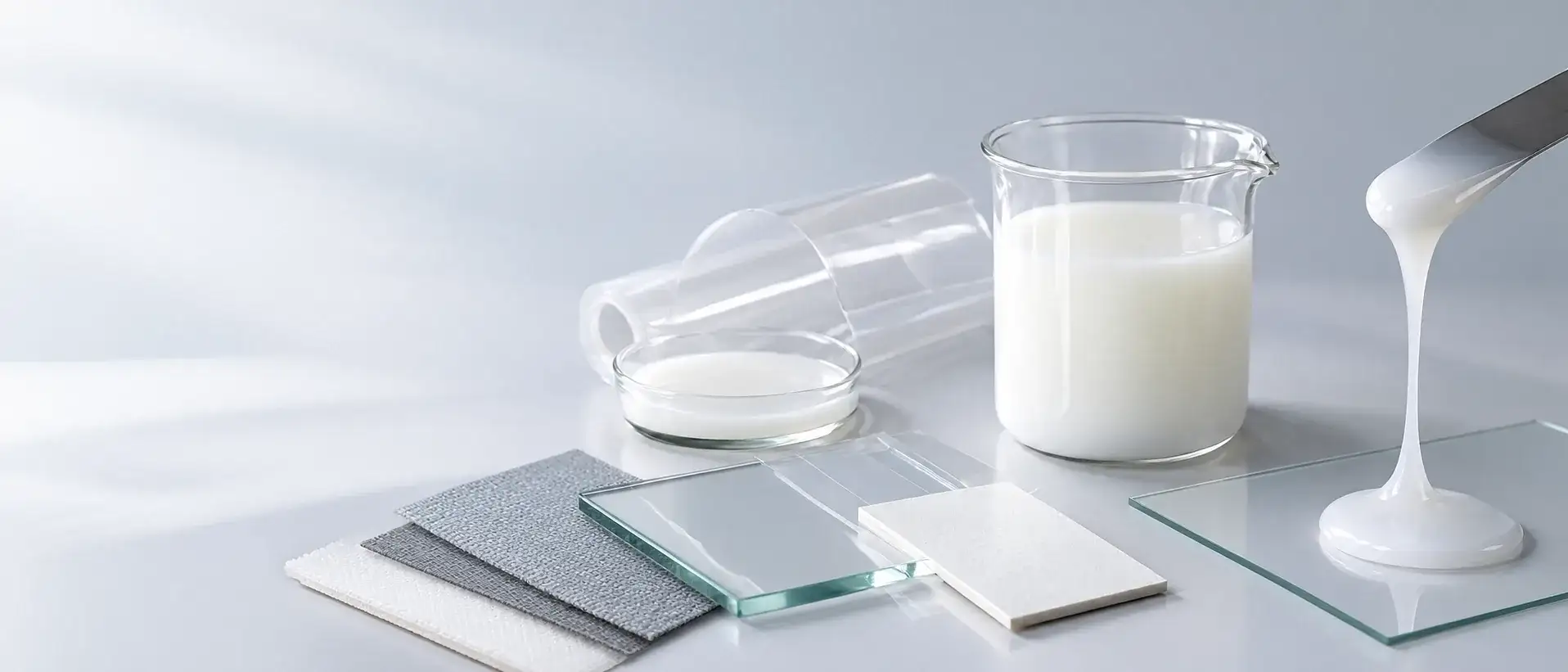
Water-Based Acrylic Adhesives
Water-based acrylic adhesives are used in a range of bonding and coating applications. The right formulation depends on the backing material, the final bonding surface, the coating process and the adhesion required. Tell us your application so we can review suitable options and sourcing feasibility.
An application we assess on request. Share your substrates, process and target requirements and we will confirm suitability, available documentation and sourcing feasibility — no stock grade is listed yet.
Discuss Your Application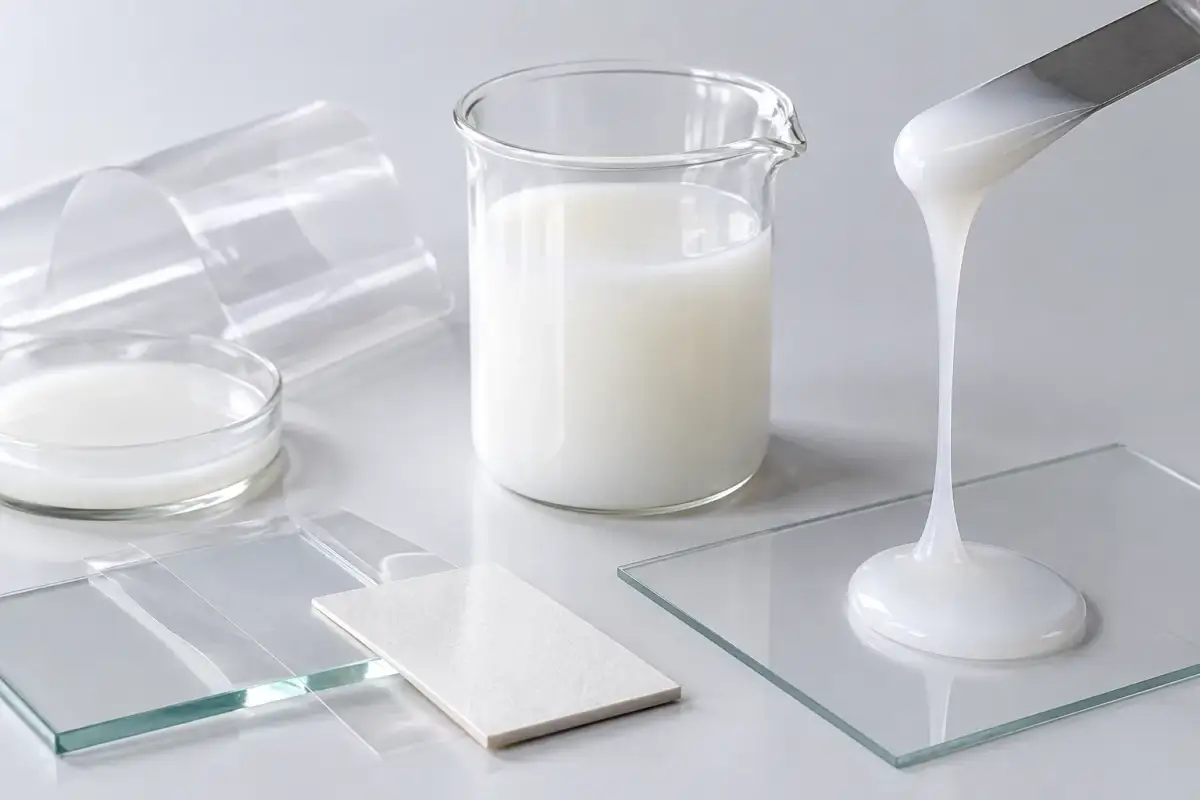
Choose Your Application
"Acrylic adhesive" covers several products that are formulated, tested and bought differently. Find yours:
Label Stock
Label adhesive is coated onto a face material — paper or film — but has to perform on the surface the label ends up on. Permanent, removable and low-temperature labels are different formulations. For cold-chain labels, the temperature the label is applied at and the temperature it lives at are two separate requirements, and condensation on the container is a third. Pressure-sensitive labels are also a different product from wet-glue labels applied on bottling lines. Our label stock page covers the three jobs and what to send for each.
Specify: Face stock, the container or surface it goes on, application and service temperature, permanent or removable.
Label stock adhesives in detail →|Discuss this application →
Tapes
A tape adhesive balances tack — grabbing on light contact — against shear, holding a load over time; pushing one usually costs the other. Double-sided and foam tapes add further checks: plasticiser migrating from PVC films or foams can soften the adhesive, and ageing under heat changes how a tape holds.
Specify: Backing (film, paper, foam, cloth), single or double-sided, the surfaces it must hold, load and temperature.
Discuss this application →Protective Films
A low-tack acrylic on polyethylene film protects metal, plastic sheet, glass and profiles through fabrication and shipping. It fails in two opposite ways: lifting during processing, or leaving residue when it comes off. Peel force tends to build with time, heat and UV, so a film that peels cleanly after a day can leave residue after months outdoors — it has to be tested over its real dwell time.
Specify: Surface and finish (for example brushed or mirror stainless, PMMA, polycarbonate, powder-coated aluminium), the fabrication process such as laser cutting or deep drawing, how long the film stays on, and whether it is stored outdoors.
Protective film adhesives in detail →|Discuss this application →
Graphics and Decorative Films
Self-adhesive graphics and decorative films need the adhesive to suit both the film — which may shrink — and the surface: painted walls, vehicles and glass behave differently. Removable graphics must come off without lifting paint; repositionable grades allow sliding before final pressure.
Specify: Film type, target surface, indoor or outdoor, removable, repositionable or permanent, intended service life.
Discuss this application →Film, Foil and Fabric Lamination
Acrylic laminating adhesives join film, foil, paper or fabric in a continuous process, either wet (combined before drying) or dry (dried, then combined under heat and pressure). Water-based polyurethane dispersions compete here; in textile lamination, wash resistance and handfeel usually decide between them.
Specify: Both materials, wet or dry lamination, target coat weight, and end-use tests such as washing or heat.
Discuss this application →Foam and Textiles
Some acrylics are used to bond foam and textiles in furniture and bedding. For spraying foam and upholstery, see our foam spray adhesive page for the solvent-borne grade and the checks that apply to each foam type, and ask about water-based options for your line.
Specify: Foam type and density, fabric, spray equipment, drying time available.
Ready-to-Coat Grade or an Emulsion You Formulate
"Acrylic dispersion" and "acrylic emulsion" describe the physical form — polymer particles in water — not whether the product is finished. Many commercial emulsion PSAs are sold as ready-to-coat grades: they go onto the coater as supplied, or with only minor adjustment such as thickening or defoaming. Others are base emulsions intended to be formulated further, with tackifier, wetting agent, crosslinker or other additives chosen by the converter or adhesive maker.
Which one a grade is comes from its supplier's description and TDS, not from the word "dispersion". The two are specified, documented and supplied differently, so tell us whether you want to coat what arrives, or formulate it yourself — or that you are not sure and want advice.
Permanent vs Removable Adhesion
Permanent adhesives are formulated for peel force that stays high or rises over time; removable adhesives for peel force that stays within a window so the label or film comes away cleanly. Removability is a property of the formulation, not of using less adhesive, and it is only meaningful with the conditions attached: which surface, how long, at what temperature, with or without UV. Two removable products can both "peel cleanly" and still differ completely after three months on a sunlit window.
Tack, Peel and Shear — and the Test Conditions Behind Them
These three properties define a pressure-sensitive adhesive. Each is measured by several published methods that do not give interchangeable numbers, so compare values only when the method, test surface and dwell time match.
| Property | What it tells you | Common methods | Must be stated with the value |
|---|---|---|---|
| Tack | How quickly the adhesive grabs on light, brief contact | Loop tack — FINAT FTM 9, PSTC-16, ASTM D6195 | Test surface and contact conditions |
| Peel adhesion at 180° | Force to peel the adhesive back on itself from a surface | FINAT FTM 1; PSTC-101 and ASTM D3330 also cover it — quote the method letter | Test surface, dwell time before peeling and peel speed |
| Peel adhesion at 90° | Force to peel the adhesive away at right angles to a surface | FINAT FTM 2; PSTC-101 and ASTM D3330 also cover it — quote the method letter | Test surface, dwell time before peeling and peel speed |
| Shear (holding power) | How long it holds a static load without sliding | Static shear — FINAT FTM 8, PSTC-107, ASTM D3654 | Load, bonded area, test surface and temperature |
More on reading these figures in our guide to adhesive specifications.
Coating and Drying Conditions
Dry coat weight is roughly the wet coat weight multiplied by the solids fraction. As an illustration only: a wet coat of 50 g/m² of an adhesive at 50% solids leaves about 25 g/m² once dry. That relationship is why a change in solids content changes both the coating setting and the load on the dryer.
Water left in the film weakens adhesion and can haze clear films, so drying has to match line speed. Polyolefin films usually need corona treatment before coating. On the pump side, a dispersion needs enough mechanical stability not to break down under shear in recirculation, and defoaming matters on high-speed heads. These are the parameters to state when you enquire:
| Parameter | Why it matters | What to tell us |
|---|---|---|
| Solids content | Sets how much wet adhesive is needed for a given dry coat weight and how much water the dryer must remove. | Your current product’s figure, if known |
| Viscosity, with its test conditions | Has to suit your coating head; a figure without spindle, speed and temperature cannot be compared. | Coating method and head type |
| pH and stability | Affects compatibility with additives and stability on pumps and in recirculation. | Whether you add anything to the adhesive |
| Wet and dry coat weight | Performance is specified at a coat weight; changing it changes tack, peel and cost. | Target dry coat weight |
| Drying conditions | Water left in the film weakens adhesion and can haze clear films. | Oven length, temperature and line speed |
| Tack, peel and shear | The three properties that define a pressure-sensitive adhesive, each meaningful only with its method. | Required values and the test method your customer uses |
| Application and service temperature | The lowest temperature it can be applied at and the range it must work in are separate limits. | Both temperatures |
| Removability and residue | Removable adhesives are judged after a stated dwell time, temperature and surface. | Dwell time, surface, indoor or outdoor exposure |
Documents to Check
- —Technical data sheet with the test method, surface and dwell time behind every performance figure.
- —Safety data sheet for the grade supplied, including any residual solvent and preservatives.
- —Application test results on your face stock and target surface — a supplier’s standard steel-panel peel does not predict performance on HDPE or a painted wall.
- —Substance declarations such as REACH SVHC, issued for the named grade. Food-contact statements only apply to a defined packaging structure and use, never to a chemistry as a whole.
- —Skin-contact and medical adhesives require biocompatibility evidence for the finished product and are outside what we assess here.
Frequently Asked Questions
What does PSA mean?
How do I choose between a permanent and a removable adhesive?
Can water-based acrylic adhesive be used on PE, PP or PET?
Do films need corona treatment or a primer before coating?
How do I avoid residue from protective film adhesive?
Can you supply an acrylic emulsion for us to formulate ourselves?
Sources
- BASF, Label adhesives
- BASF, Acronal 3760 — acrylic dispersion for removable labels
- BASF, High-performance sustainable adhesive technologies for specialty tapes
- Dow, Acrylic pressure-sensitive adhesives
These references describe the technology in general. Performance figures from other manufacturers apply to their products, not to PACT grades, and a citation does not imply endorsement. Content reviewed September 16, 2026.
Related guidance for acrylic adhesive buyers
- All water-based adhesive options
Acrylic, polychloroprene, PU, PVAc and VAE compared by application.
- Where labels and films meet the packaging line
Pressure-sensitive labels, wet-glue labelling and carton work are different adhesives.
- Bonding foam rather than coating film
Which foams are at risk from solvent, and which from not bonding at all.
- How to read the numbers on a datasheet
What each figure predicts, what it does not, and why one without its test method is not comparable.
- Look up a term and its other names
Non-acid silicone is neutral cure; liquid nails is grab adhesive. Fifty terms with their synonyms.
- Check the VOC limit for your destination market
Which instrument actually governs adhesives in the US, EU and China — and which ones are wrongly cited.
- Storage, shelf life and what heat does to it
Why a container crossing the tropics at 60-70°C is the hardest storage condition your adhesive will see.
- Review our certifications and test reports
ISO 9001, ISO 14001, REACH statements and SGS reports, and what each one covers.
- Send a specification and get a quote
Substrate, volume and destination market are enough for us to price it.
Share Your Materials and Process
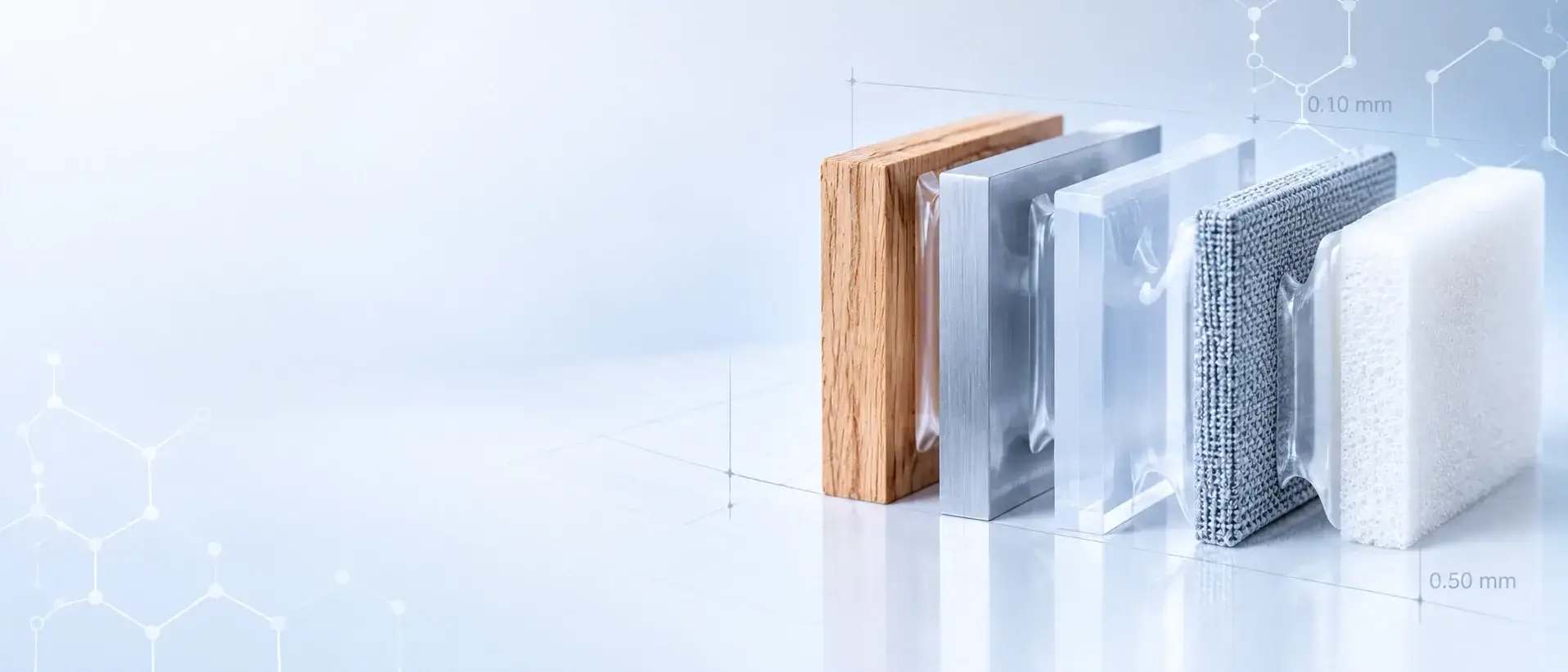
Share the materials you need to bond or coat, your application process and any target specification. We will review the request and confirm sourcing feasibility, available documentation and next steps.