
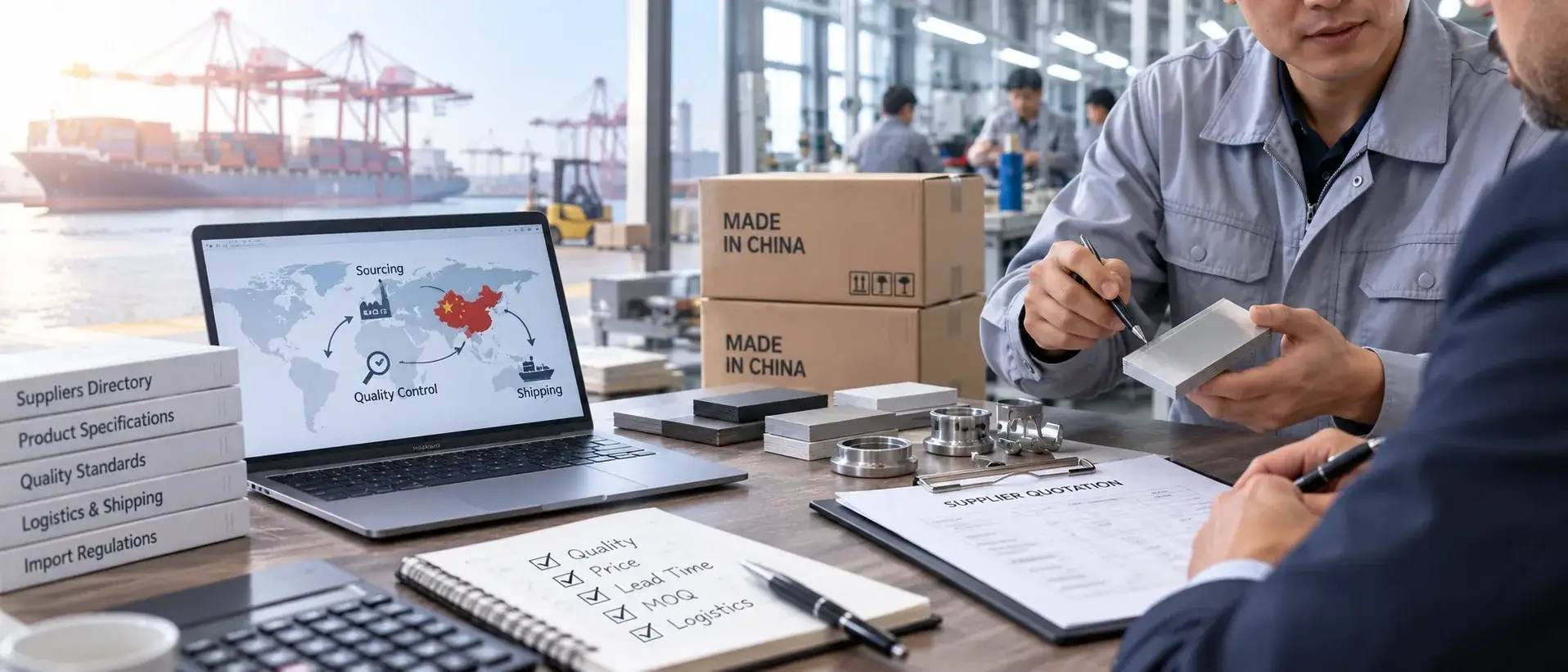
Sourcing guide
Should You Source Adhesives from China?
Where the cost difference actually comes from, what it costs you in speed and flexibility, and the five cases where the honest answer is to buy locally instead.
Last updated: 2026-09-07
The short version
China suits volume, planned demand and solvent-borne or high-solids products. It suits small, urgent, low-value-per-kilogram or already-qualified purchases badly.The decision is about which of those describes your order — not about the country.
We manufacture in Nansha, Guangzhou, so this page is written by an interested party. That is exactly why the section on when not to buy from China is the longest one on it — a sourcing guide that never reaches a negative conclusion is an advertisement wearing a guide's clothes.
Where the cost difference actually comes from
Not from cheap labour. Adhesive is a capital and material business — reactors, filling lines and feedstock. These are the four drivers in the order they matter.
| Driver | Weight | Why |
|---|---|---|
| Raw material proximity | Largest single factor | Chloroprene rubber, SBS, tackifying resins and solvents are produced at scale within China, much of it inside the same petrochemical complexes. A European or North American formulator is frequently importing the same monomers before they start. |
| Packaging supply chain | Substantial | Tinplate cans, aerosol cans, valves, cartridges and cartons are all made locally, often within the same province. Packaging is a substantial share of the cost of a filled adhesive, and it does not travel well before filling. |
| Plant utilisation | Substantial | Lines run at volumes set by a domestic construction and manufacturing market far larger than the export order in front of them. Fixed cost per kilogram falls accordingly. |
| Labour | Minor | Real, but the smallest of the four. Adhesive manufacturing is capital and material intensive — reactors, filling lines and raw material, not people. Anyone selling China purely on labour cost has not looked at the cost sheet. |
Five cases where the answer is to buy locally
These come up in our own enquiries, and where one applies we would rather say so at the first email than take an order that will disappoint.
1.Small or irregular volumes
Below roughly a pallet, freight, documentation and dangerous-goods handling swamp the unit saving. Our own liquid MOQ is 500 kg; under that a local distributor is genuinely cheaper, and we will say so.
2.You need it in two weeks
Production plus a 18-22 days sea leg to the nearest market is the best case, and 35-55 days to the furthest. Air freight is effectively closed to solvent-borne adhesive. If the line stops next month, buy locally this time and qualify a Chinese source for the one after.
3.Water-based product at low value per kilogram
A water-based adhesive is mostly water. Shipping it 10,000 km means paying freight on water, and on a low-value grade that can exceed the entire manufacturing saving. Solvent-borne and high-solids products carry the freight far better.
4.The grade is already qualified with an incumbent
Requalification on a regulated programme — automotive interior, medical, aerospace — costs more in engineering time than several years of unit saving. Change the source when the programme changes, not in the middle of it.
5.You need weekly formulation iteration
A local formulator can put a chemist in your plant on Tuesday. Across a time zone gap and a courier leg, each iteration costs a week. For fast development work that difference matters more than price.
The third one is worth restating because it runs against our own interest most directly: a water-based adhesive is mostly water, and shipping water across an ocean is a poor use of a container. On low-value water-based grades in modest volumes, a local supplier will usually beat us on landed cost no matter how the ex-works numbers compare.
Model landed cost, not ex-works
Most first quotations arrive ex-works, and most first comparisons are therefore wrong. These are the lines to add before you compare a Chinese quotation with a local one.
Ex-works price
The number most quotations start at. It is not what you will pay.
+ Inland haulage and export clearance
To reach FOB at Guangzhou or Shenzhen.
+ Dangerous goods surcharge
Solvent-borne adhesive is UN 1133 Class 3; aerosols UN 1950. DG packaging certification, declaration and carrier surcharge all apply.
+ Sea freight and insurance
Varies more than any other line. Get it quoted for the season you will actually ship in.
+ Duty and import VAT
Depends on HS classification, which for adhesives depends on the polymer. Confirm the code before you model the cost.
+ Destination handling and DG fees at port
Often overlooked, and higher for dangerous goods than for general cargo.
+ The shelf-life cost of transit
A 30-45 days voyage consumes a meaningful part of a 12-month shelf life before the goods reach your warehouse.
We quote FOB, with CIF and DDP on request — ask for the CIF or DDP number rather than FOB if you want a figure you can compare directly with a local supplier's delivered price. Dangerous goods handling is covered in more detail onstorage and shelf lifeand in the shipping FAQ.
"China" is not one supply base
Adhesive manufacturing clusters differ by province, and the cluster a factory sits in tells you something about what it will be good at.
| Region | Strength | Why it matters to a buyer |
|---|---|---|
| Guangdong / Pearl River Delta | Aerosols, consumer packaging, footwear and furniture adhesive | Can and valve supply is local, so aerosol filling is economic here and awkward elsewhere. The industries that consume the product are next door. |
| Shandong | Bulk chemicals and commodity resins | Strong on price at scale for straightforward chemistries; less oriented to small custom runs. |
| Jiangsu / Zhejiang | Specialty chemicals and engineering adhesives | Where to look for structural and electronics-grade products rather than volume construction lines. |
We are in Nansha District, Guangzhou — the Guangdong cluster — which is why our range is weighted to contact, spray, footwear and construction products rather than to electronics adhesives. More about the factory.
What changes compared with a local supplier
| Local distributor | Direct from China | |
|---|---|---|
| Lead time | Days | 7-15 days plus 18-22 days to 35-55 days at sea |
| Minimum order | A pail | 500 kg, or 200 kg for a trial |
| Unit cost | Higher — carries their margin and stock cost | Lower at volume, before landed cost |
| Formulation change | Rarely possible — they resell | Possible; 2-4 weeks to develop |
| Traceability | Depends what the distributor holds | Batch records at source, if the supplier is a real manufacturer |
| Dangerous goods | Their problem | Yours to understand, ours to document |
| Iteration speed | Fast if they have a chemist | A week per round, minimum |
The honest summary: buying direct trades speed and convenience for cost, control and the ability to change the product. That trade is good on planned volume and bad on urgency.
Frequently asked questions
Is Chinese adhesive lower quality than European or American adhesive?
Why is adhesive cheaper to make in China?
What are the hidden costs of importing adhesive from China?
Why is Guangdong specifically associated with adhesive manufacturing?
How long does it take to qualify a Chinese adhesive supplier?
Should I use a sourcing agent or buy direct from the factory?
If the answer is yes, what happens next
- Eight checks before you pick a supplier
Manufacturer or trader, grade-level test data, VOC position and dangerous-goods handling — apply them to us too.
- Put your own brand on an existing line
The usual first step for an importer: a proven formulation, your label.
- What importing into Southeast Asia involves
Transit, humidity and the paperwork the region asks for.
- Storage, shelf life and what heat does to it
Why a container crossing the tropics at 60-70°C is the hardest storage condition your adhesive will see.
- Check the VOC limit for your destination market
Which instrument actually governs adhesives in the US, EU and China — and which ones are wrongly cited.
- Review our certifications and test reports
ISO 9001, ISO 14001, REACH statements and SGS reports, and what each one covers.
- See who actually manufactures this
PACT (GUANGZHOU) INDUSTRY CO., LTD — liquid, aerosol and cartridge lines under one roof in Nansha.
- Browse the full technical library
Every reference page and guide, grouped by the question it answers rather than by date.
- What happens between order and container
Eight stages with real durations, and the three places programmes actually stall.
- Send a specification and get a quote
Substrate, volume and destination market are enough for us to price it.

Tell us the volume and the deadline
Those two decide whether sourcing from China makes sense for your order. If they say it does not, we will tell you — an order that disappoints costs us more than the one we did not take.