
Acetoxy Silicone Sealant
Fast-curing acetoxy (acetic cure) silicone sealant for glass, glazing and sanitary work. Highest tack and quickest skin-over of any silicone chemistry, at the cost of substrate compatibility.
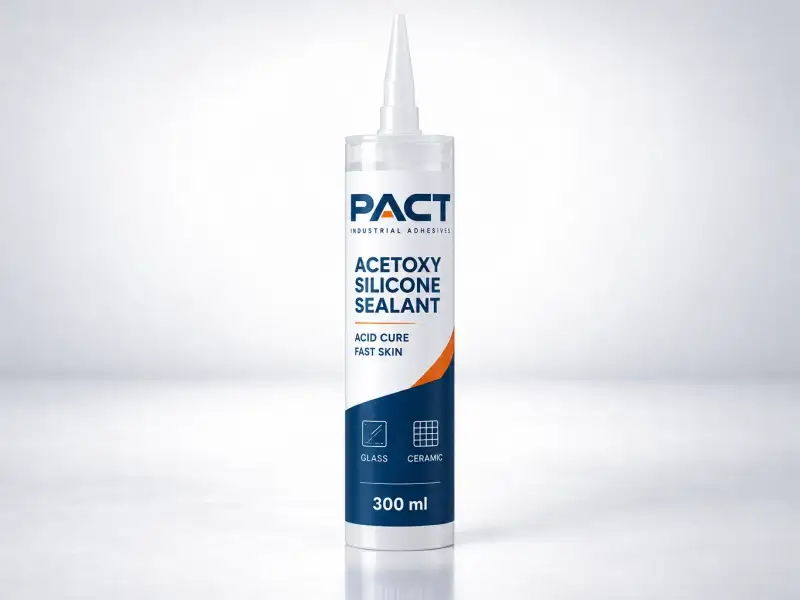
Acetoxy silicone sealant is the fastest-curing and lowest-cost of the three silicone chemistries we manufacture. It is named after the acetic acid released as the polymer cross-links — the sharp vinegar smell that fills a room while a joint is skinning over. That same acid is the reason the product is specified precisely: it delivers the highest initial tack and the quickest skin formation of any silicone, and it is chemically incompatible with a short but important list of substrates.
Buyers searching for non-acetoxy silicone are looking for the opposite chemistry — what the industry calls neutral cure. If your joint runs against copper, mirror backing, marble or concrete, that is the grade you need, and our neutral cure silicone sealant covers it. If the substrates are glass, glazed ceramic, aluminium or uPVC, acetoxy is the faster and cheaper choice and there is no performance reason to pay for neutral.
Acetoxy sealant skins over faster than a neutral cure grade and then cures from the surface inward, at a rate set by temperature, humidity and joint depth. It suits glass-to-glass joints that move very little, and is less suited to wide construction expansion joints, where the movement class on the datasheet matters more than skin time. The measured skin time, hardness, tensile strength, elongation and movement class for our grade belong on its production TDS — ask for it, and for the test report behind any standard it names, with your quotation.
Acetoxy vs Neutral (Non-Acetoxy) Silicone
| Property | Acetoxy Cure | Neutral Cure |
|---|---|---|
| Common name | Acetoxy / acetic cure | Neutral / non-acetoxy |
| Cure by-product | Acetic acid (vinegar odour) | Oxime or alcohol |
| Skin formation | Faster | Slower |
| Substrate range | Non-porous, acid-stable surfaces only | Wider — mirror, natural stone and structural joints still need a grade confirmed for that use |
| Relative cost | Lower | Higher |
For a fuller treatment of when each chemistry is appropriate, see our guide to neutral vs acetoxy silicone sealant.
Substrate Compatibility
Substrate compatibility is the single decision that determines whether acetoxy is the right specification. The table below is the short version of the rule: acetoxy is for non-porous, acid-stable surfaces.
| Substrate | Acetoxy | Reason |
|---|---|---|
| Glass, glazed ceramic, enamel | Suitable | Primary use case — highest tack and clarity |
| Aluminium, uPVC, powder-coated steel | Suitable | Standard glazing bead and frame sealing |
| Acrylic, polycarbonate, ABS | Suitable | Test first; some grades stress-craze thin sheet |
| Stainless steel | Suitable | No acid attack on passivated surfaces |
| Copper, brass, zinc, galvanised steel | Do not use | Acetic acid corrodes the metal and the bond fails |
| Mirrors | Do not use | Attacks the silver backing — black-edge deterioration |
| Marble, limestone, natural stone | Do not use | Acid staining, often permanent |
| Concrete, mortar, masonry | Do not use | Alkaline substrate neutralises the acid; adhesion fails |
Where any listed substrate is unsuitable, specify neutral cure silicone sealant instead — it carries no acid. For mirrors and natural stone, also confirm that the neutral grade is compatible with that backing or stone.
Key Features
- Skins over faster than neutral cure — the skin time for the grade is on its TDS
- Suited to glass-to-glass and glazing bead work on non-porous surfaces
- Transparent grade for display glazing — confirm the grade against your glazing specification
- Mildew-resistant grade available for sanitary and wet-area joints
- Lower cost per cartridge than neutral cure — high-volume glazing economics
Technical Specifications
| Parameter | Value |
|---|---|
| Cure System | Acetoxy (Acetic Acid Release) |
| Base Polymer | 100% Silicone |
| Color Options | Clear, White, Black, Grey |
| Packaging | 280ml, 300ml cartridge; 590ml sausage; 20L pail |
Indicative values for the series. Figures move with the grade, the substrate pair, coat weight and cure conditions, so treat them as a basis for comparison rather than a specification — the technical data sheet for the grade you are supplied states the values that apply to it, and the conditions they were measured under.
Applications
- Glass-to-glass bonding — display cabinets, shower enclosures, aquariums
- Glazing bead and window sealing on aluminium and uPVC frames
- Sanitary sealing — baths, basins, shower trays (mildew-resistant grade)
- Interior joint sealing on glazed tile and non-porous surfaces
- General-purpose sealing where substrates are glass, glazed ceramic or plastic
Explore construction industry solutions: Construction.
Available Packaging
Acetoxy silicone sealant ships in 280ml and 300ml cartridges for standard caulking guns, 590ml sausage packs for high-output glazing work, and 20L pails for production line dispensing. Clear, white, black and grey are stock colours; clear is the highest-volume grade for glass work. Private label cartridges with your own artwork and multilingual regulatory markings are available — see our private label service.
Certifications & Compliance
We list a standard here only once the test report for this grade has been checked. Tell us which standard your project cites — ASTM C920, EN 15651 and GB/T 14683 are the usual ones for sealants — and we will confirm what the grade has been tested to.
Quick Specs
- Cure System
- Acetoxy
- Base Polymer
- 100% Silicone
- Colours
- Clear, White, Black, Grey
- Measured Values
- On the grade TDS
Get a Quote
Request pricing, samples, or technical data sheets for Acetoxy Silicone Sealant.
Request a QuoteFrequently Asked Questions
What is the difference between acetoxy and non-acetoxy silicone?
Which substrates should never be sealed with acetoxy silicone?
How fast does acetoxy silicone sealant cure?
Is acetoxy silicone sealant suitable for bathrooms?
What is the minimum order quantity for acetoxy silicone sealant?

Ready to Order Acetoxy Silicone Sealant?
Contact our sales team for factory-direct pricing, bulk order discounts, and free product samples.